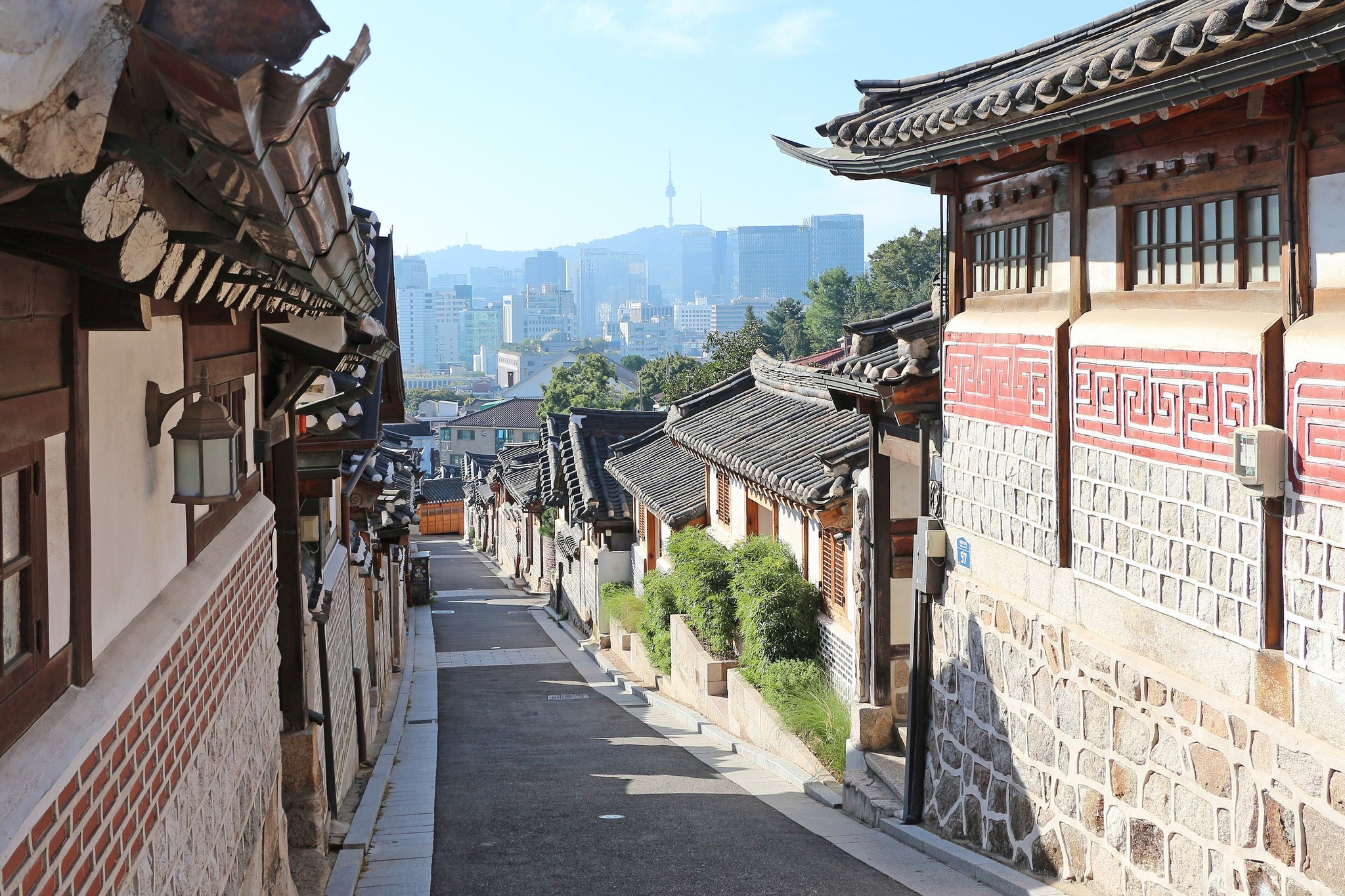

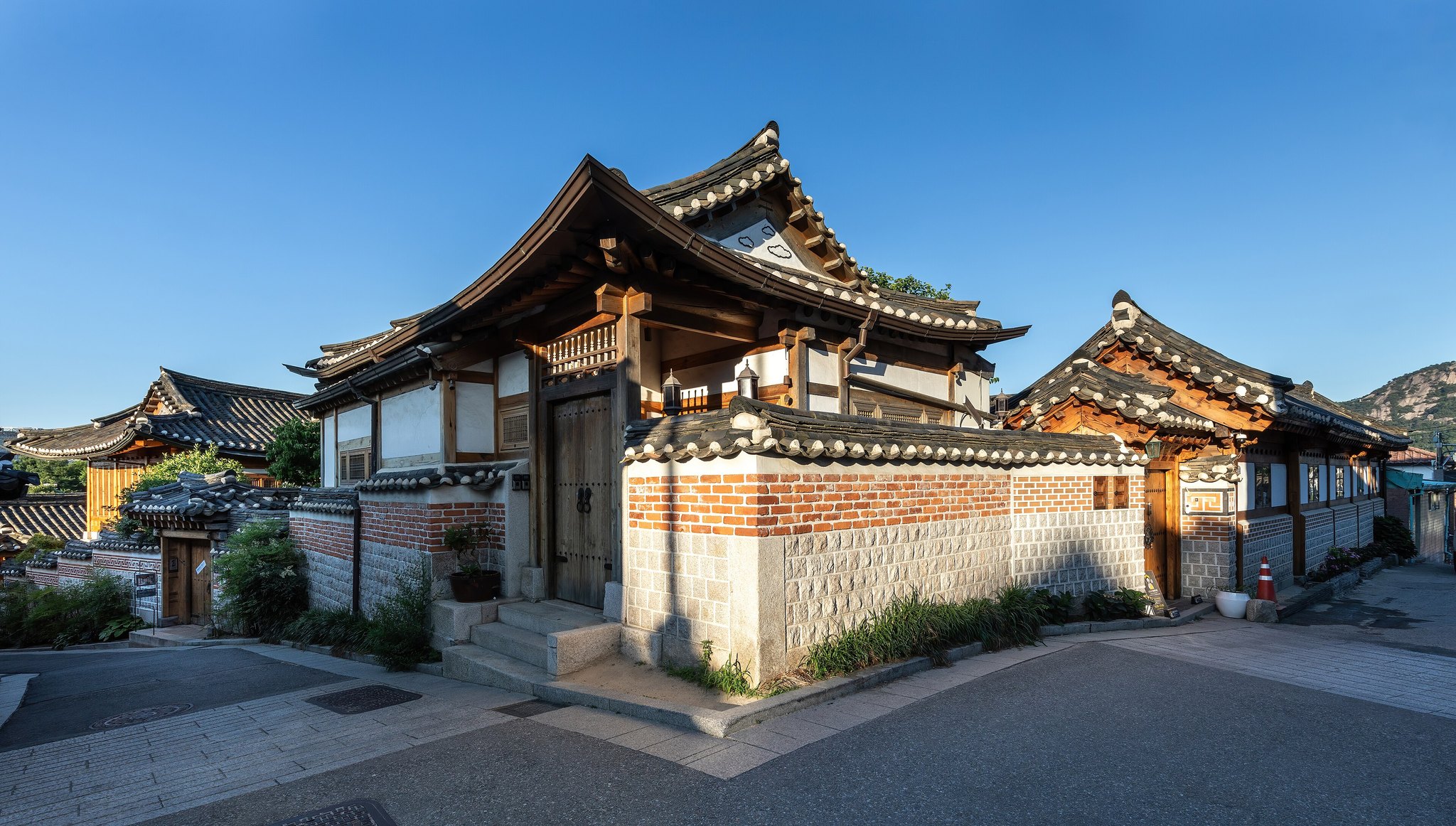
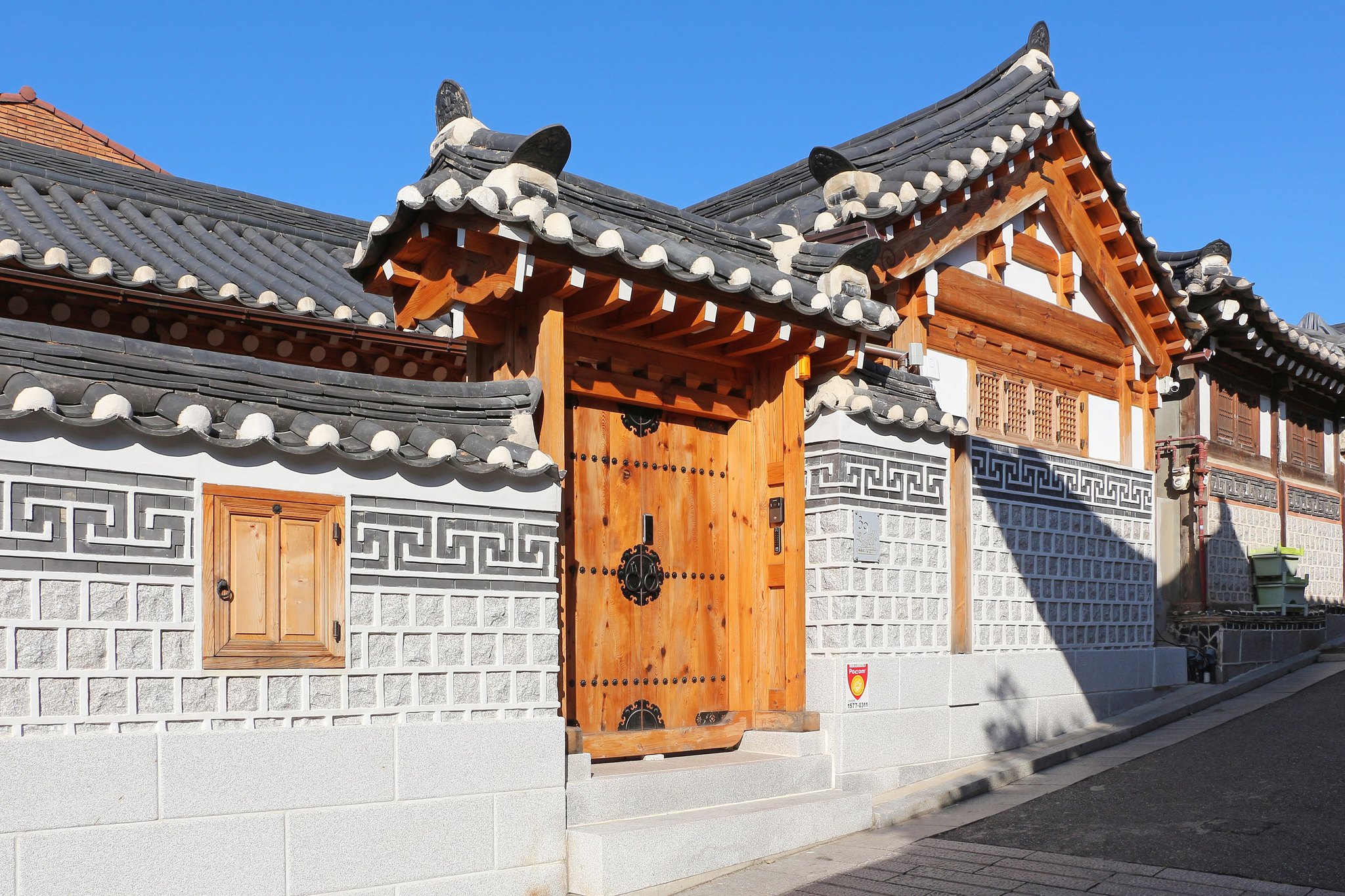
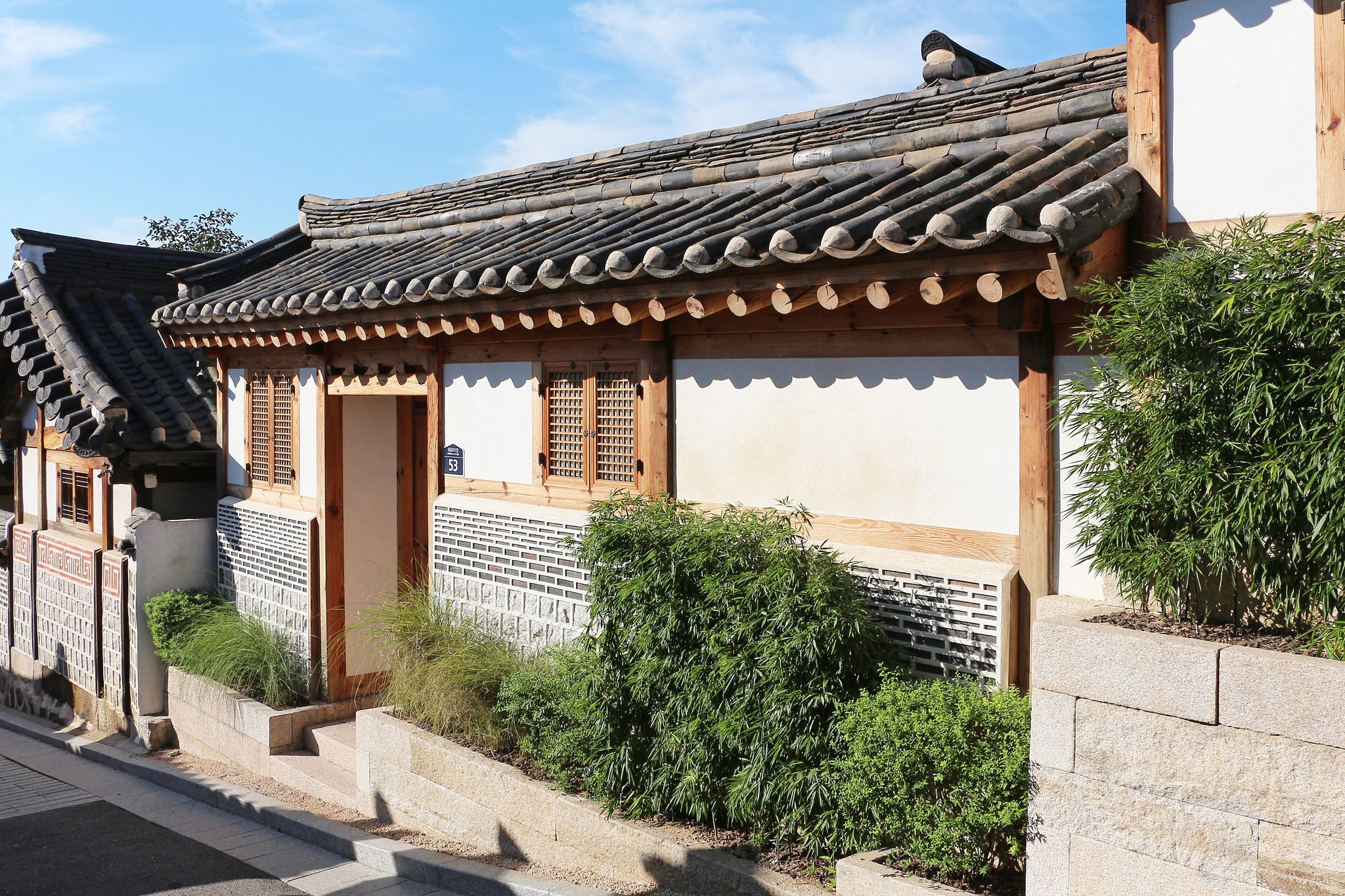
A hillside of tiled roofs between Gyeongbokgung and Changdeokgung — the quarter where the Joseon officials lived, close to both palaces because that is where the work was. Most of what stands is not five hundred years old: it is 1930s urban hanok, built speculatively in terraces when Seoul was growing, which is why the lanes are so regular.
⚠️ It is a residential neighbourhood, not a heritage park. People live behind those gates, they have been overwhelmed by visitors for a decade, and the city has responded with posted visiting hours and quiet rules on the busiest lane.
What it costs
⭐ Free — it is a set of public streets.
What costs is going inside one: a handful of hanok operate as museums, tea houses or craft workshops and charge for entry or for a class. The rest are private homes.
When to go
⚠️ Bukchon-ro 11-gil, the famous photograph lane, has enforced visiting hours and is closed to visitors in the evening and on Sundays, with fines posted. This is recent, it is signed in several languages, and it is the result of residents being filmed through their windows for years.
Early morning is best for the light and for the noise. Keep your voice down and do not go through gates.

Getting there
Anguk station on line 3, exit 2, then uphill. The lanes are steep and cobbled in places.

If you only have an hour
Up from Anguk through the quieter western lanes first, then across to the viewpoints where the roofline drops away with N Seoul Tower behind it. Then down into Samcheong-dong for the cafés and galleries, or east into Ikseon-dong, a smaller and denser hanok quarter that has been converted into bars and restaurants and is where people actually go in the evening.
What people get wrong
Treating it as an exhibit. There are signs asking for quiet in five languages and they are not decorative.
And going only to the one lane everybody photographs. The streets either side are the same architecture without the crowd.

Nearby
Ticketing arrangements, closing days and boat timetables as published and checked on 5 September 2026. These change without much warning — confirm with the place itself before you travel. More sights, and how they fit together, in Landmarks & Sights.