One card does everything, and the last train is the only real deadline
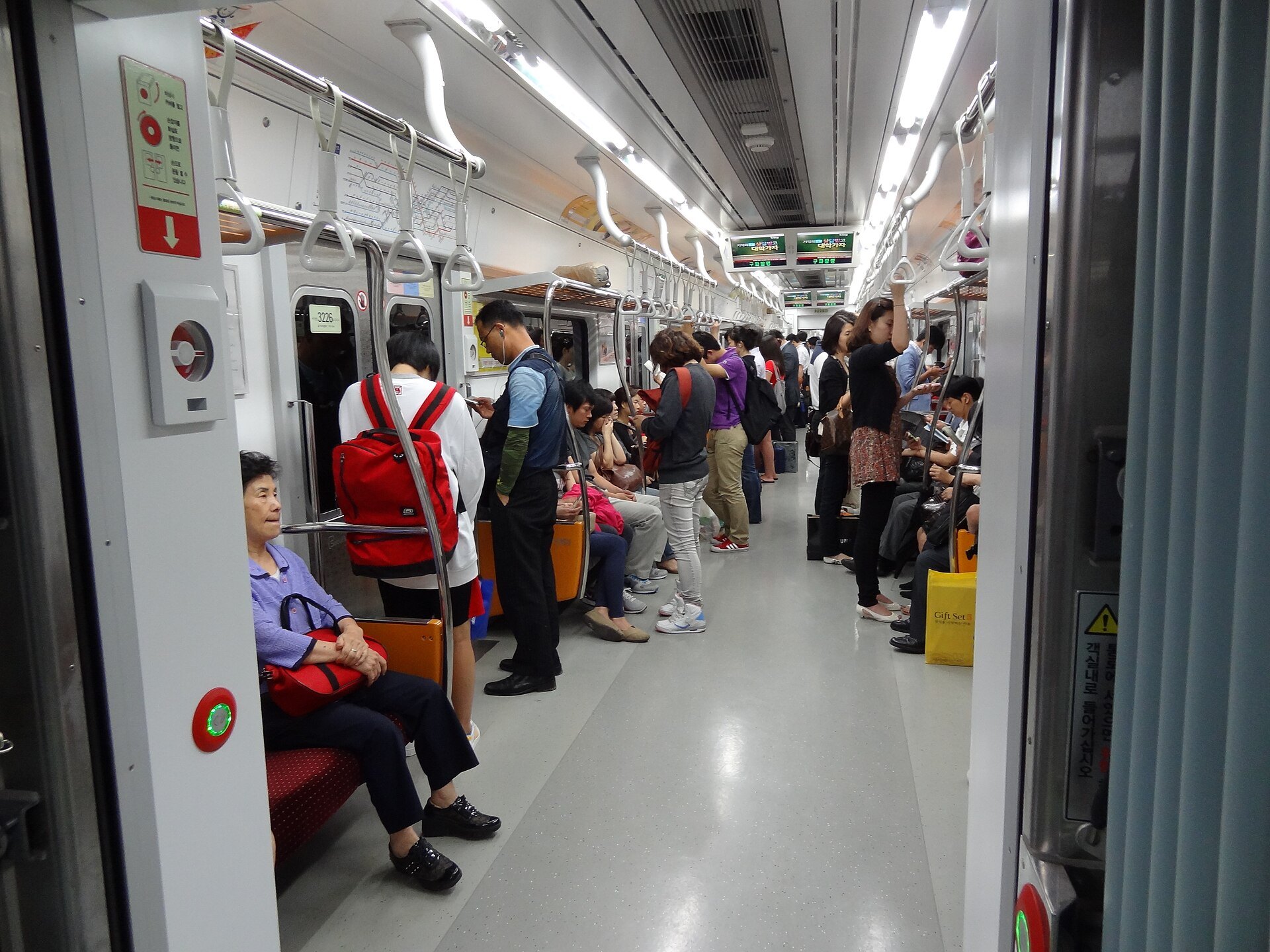
Seoul's transport is among the best in the world and it is almost entirely solved by a single
purchase. A T-money card — sold at any convenience store and at machines in every
station — pays for the subway, every city bus, most taxis, and a bottle of water in the shop where
you bought it. Tap in, tap out, done. There is no zone to understand before you travel.
⚠️ You must tap the card again when you leave, on the subway and on the bus.
The fare is distance-based, so tapping out is how the system knows where you stopped. Fail to and
you are charged as though you rode to the end of the line — and, worse, you lose the free transfer.
On the bus this catches almost every visitor once, because it feels like the journey is over when
you stand up.
Transfers between subway and bus, and between buses, are free within a time window
if you tapped out properly. A journey with two changes can cost barely more than a journey with
none, which is why Seoul is cheap to move around in a way that is not obvious from the map.
The lines are colours, and the colours are the map
Nine numbered lines run through the centre — line 1 dark blue, line 2 green, line 3 orange, line
4 light blue, line 5 purple, line 6 ochre, line 7 olive, line 8 pink, line 9 gold — plus a set of
named suburban and light-rail lines. The colour is the primary identifier everywhere: on the
platform, on the train, on the signage and on the exits.
Line 2 is a circle. It loops the city and touches Hongdae, Sinchon, City Hall,
Euljiro, Dongdaemun, Jamsil and Gangnam, so a very large share of visitor journeys can be done on
it alone by picking a direction.
⭐ The exit number matters more than the station. Big interchanges have more
than a dozen numbered exits spread over several hundred metres, and coming up the wrong one can
mean a fifteen-minute walk back. Every station's exits are numbered on the platform signage and
every address in Seoul is given with its exit.
⚠️ The last train is around midnight, and that is the trap
Services stop somewhere in the region of midnight, earlier on some lines and
directions and slightly later on others, with a broadly later last train on Fridays and
Saturdays. The exact time depends on which line, which direction and which day, and the station
displays it.
This is the mistake visitors actually make in Seoul, because nothing else about the city closes.
The restaurants are open, the markets are open, the streets are full — and the trains have gone.
The fallback is a taxi, or the night buses, whose route numbers begin with
N and which run through the small hours on a limited network.
Taxis, and the app
Taxis are metered, plentiful and not expensive by international standards. A late-night surcharge
applies. Hailing one in the street after the last train, in a nightlife district, on a Friday, is
genuinely difficult — everybody wants the same thing at the same time. Locals use a
hailing app and it is the difference between waiting five minutes and waiting
forty.
Walking
Central Seoul is more walkable than its size suggests, but it is hilly and it
is cut by very wide roads. Crossing a major boulevard often means an underpass or a footbridge
rather than a crossing, and the underpasses are frequently small shopping arcades in their own
right — you can walk a surprising distance in central Seoul without coming up for air.
Seoul’s subway has a last train, and it does not run at the same clock time everywhere. Each line publishes a last-train time for its terminal station. Every other station on that line has an earlier effective cutoff, because the train has to travel there first. Miss it, and the options are a taxi or … Read more
T-money is a rechargeable stored-value card, issued by Korea Smart Card Co., that pays for subway rides, buses, most taxis and a scattering of convenience-store purchases across Seoul. You buy the card once, load cash onto it, and tap it on a reader at the start and end of every journey — the tapping out … Read more