Which airport you land at changes your first ninety minutes
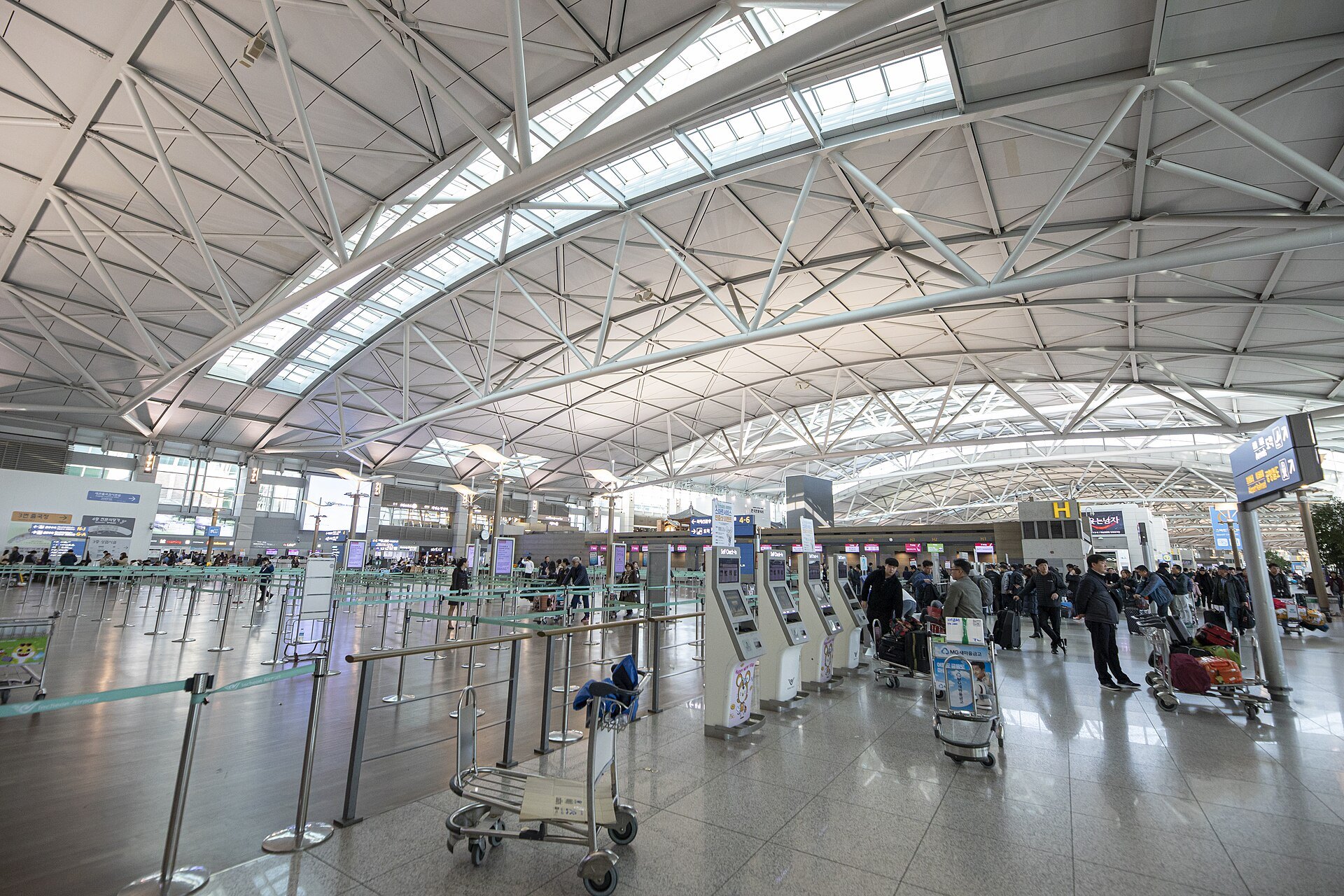
Seoul has two. Incheon (ICN) is the big international one, on an island west of
the city, and it is consistently rated among the best airports anywhere. Gimpo (GMP)
is much closer in, handles domestic flights and a handful of short-haul regional routes, and is
about half the journey time from the centre.
If you have a choice of routing — and on flights from Tokyo, Osaka, Shanghai, Beijing and Taipei
you often do — Gimpo saves you an hour each way.
The AREX airport railroad runs from both Incheon terminals to Seoul Station and
comes in two forms, which is the thing to get right:
The Express is non-stop to Seoul Station, has assigned seats and luggage
space, and is the fastest scheduled option.
The All-Stop is an ordinary commuter train on the same tracks. It takes longer,
it stops everywhere including Gimpo and Hongik University, and you pay for it with an ordinary
T-money tap. If your hotel is near a station on its route it is both cheaper and more
convenient than the Express, because you avoid a change at Seoul Station.
The airport limousine buses are the underrated option. They run from set stands
outside arrivals to named hotel and district stops all over the city, they have proper hold
luggage space, and if one goes near where you are staying it beats a train plus a subway change
with two suitcases. Boards at the stands list the routes in English.
⚠️ A taxi from Incheon is a long way and priced accordingly, and there is a toll on top. It is a
reasonable choice late at night and an expensive one otherwise.
Photograph by myself ( User:Piotrus ), Wikimedia Commons, CC BY-SA 3.0
Arriving by train
Seoul Station is the hub: KTX high-speed services south to Daejeon, Daegu and
Busan, and west to Gwangju, plus the AREX and subway lines 1 and 4. Yongsan
handles most of the southwestern KTX routes. Buying ahead matters at holidays and matters little
otherwise.
⭐ KTX to Busan takes under three hours and makes the far end of the country a
plausible overnight trip rather than an expedition.
Long-distance buses
Korea's express bus network is extensive, cheap and comfortable, and reaches a great many places
the trains do not. The main terminals are Seoul Express Bus Terminal in the south
and Dong Seoul in the east. For anywhere without a KTX station, the bus is usually
the answer rather than the fallback.
⚠️ Before you fly: the entry authorisation
Visitors from many visa-free countries need an electronic travel authorisation obtained
before departure. The rules, the fee and the list of exempted nationalities have
all changed more than once in recent years, and temporary exemptions have been granted and
withdrawn. Check the current requirement against your own passport on the official Korean
government site before you book — this is the single detail on this page most likely to be
out of date wherever you read it.
Take AREX Express only if your final stop is Seoul Station itself. For almost everywhere else — Hongdae, Gongdeok, a hotel near a different subway line — the All-Stop train gets you there in about the same total time, or faster, because it stops where you actually need to get off instead of forcing a … Read more