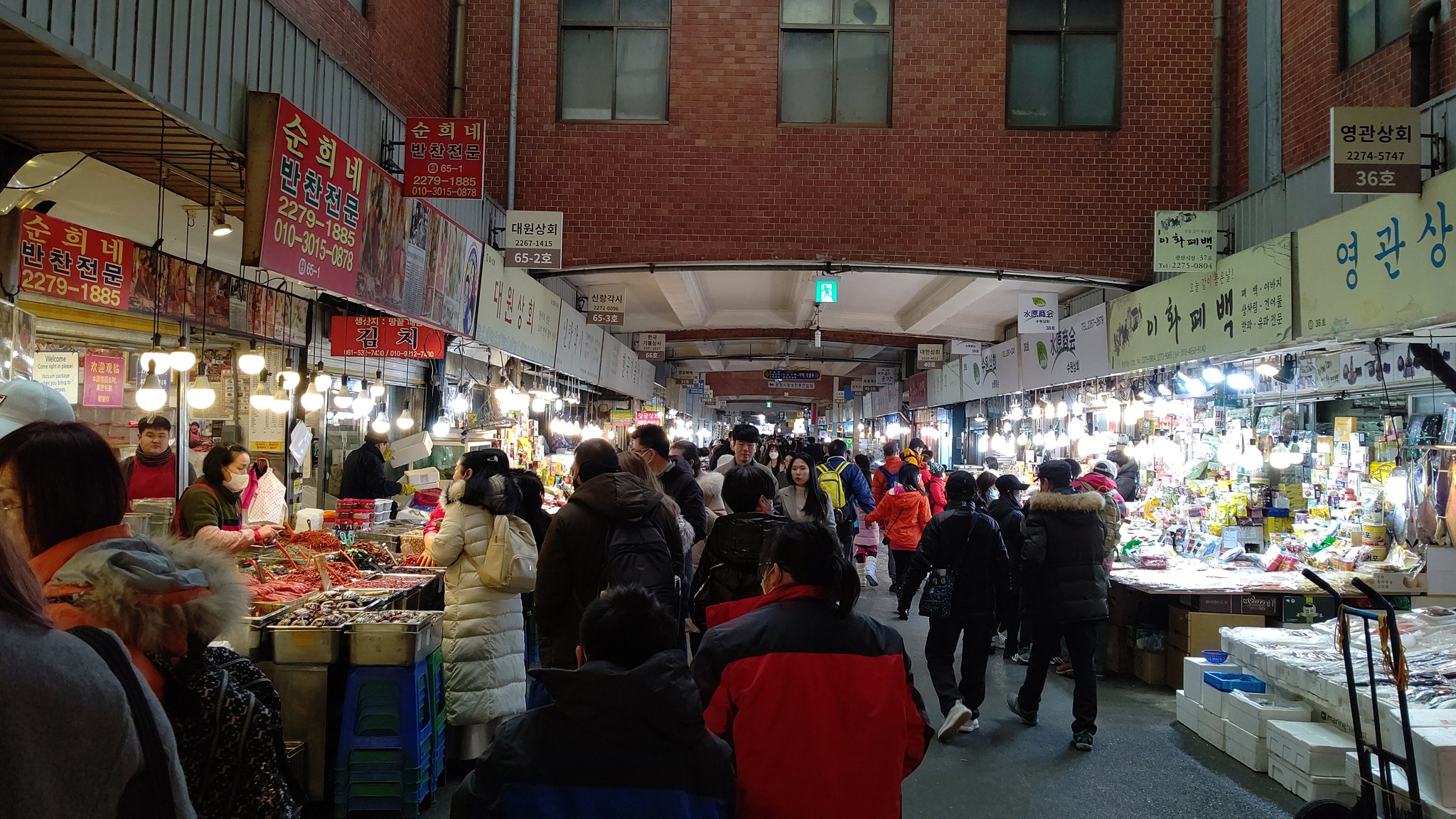

Korea’s oldest permanent market, opened in 1905, and the one that turned into a food hall. The upstairs still sells fabric and hanbok, which is what it was built for. The ground floor is several hundred stalls cooking, with stools around them, and it is the best eating in Seoul that does not involve a reservation.
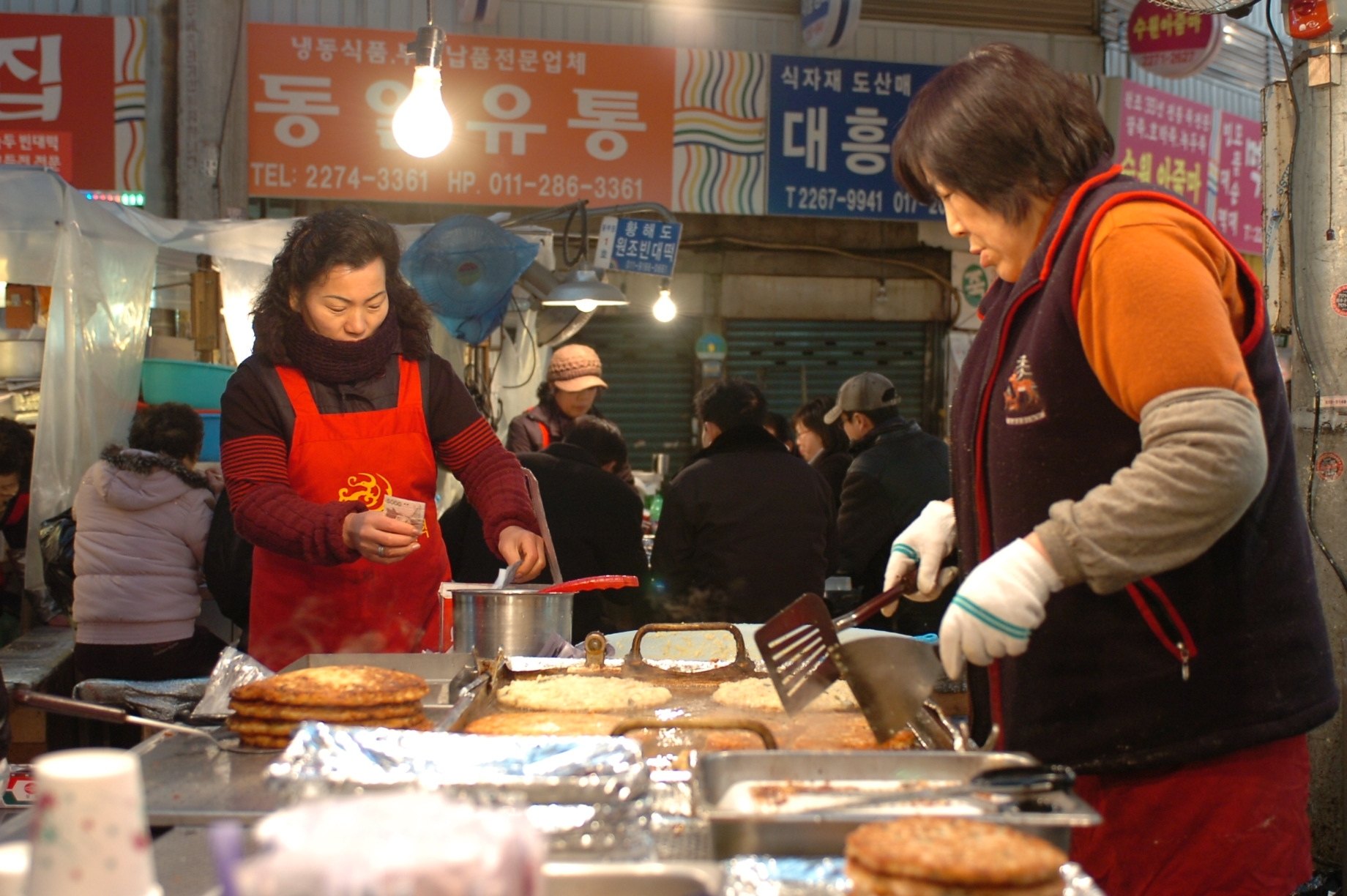
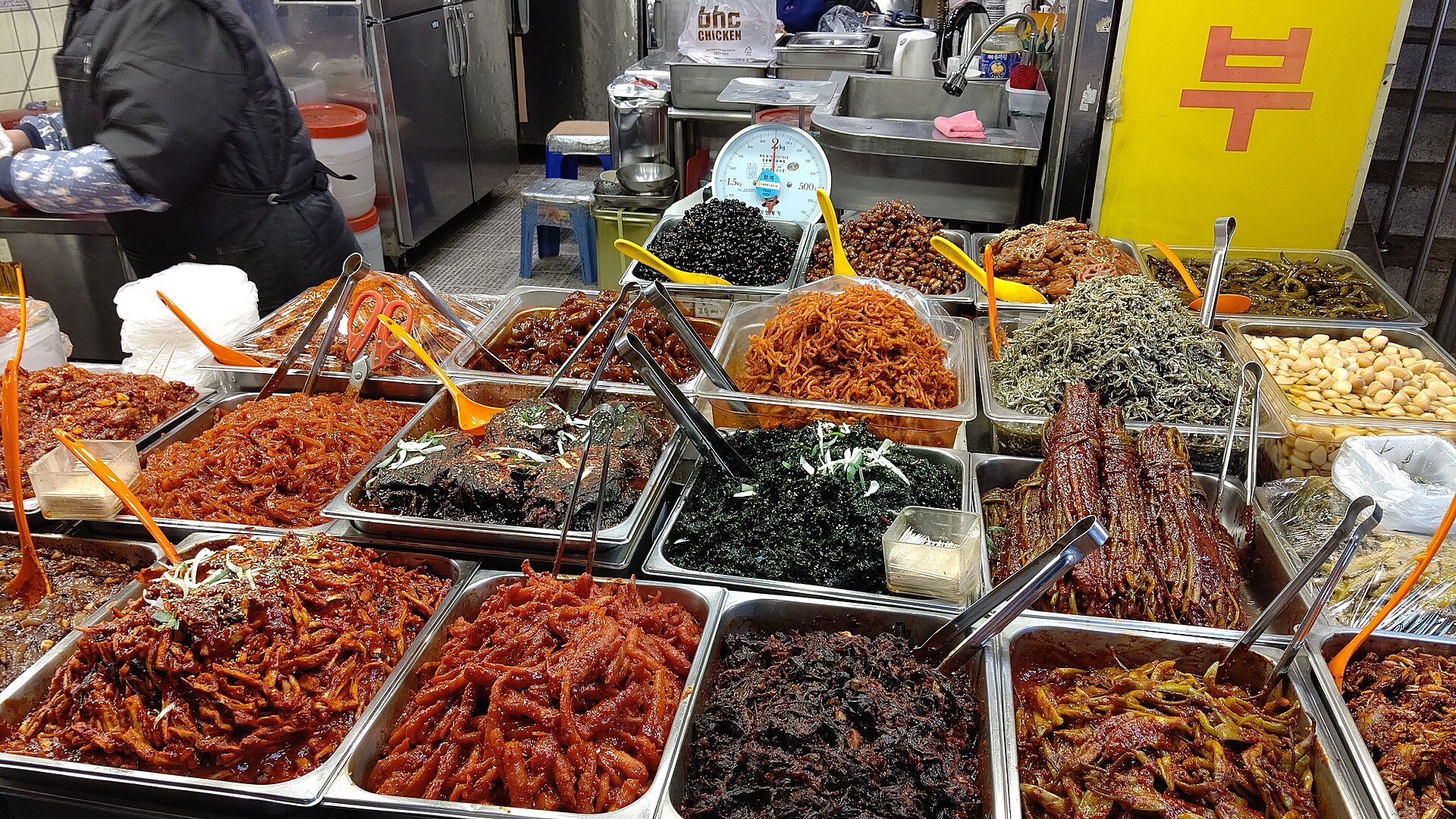
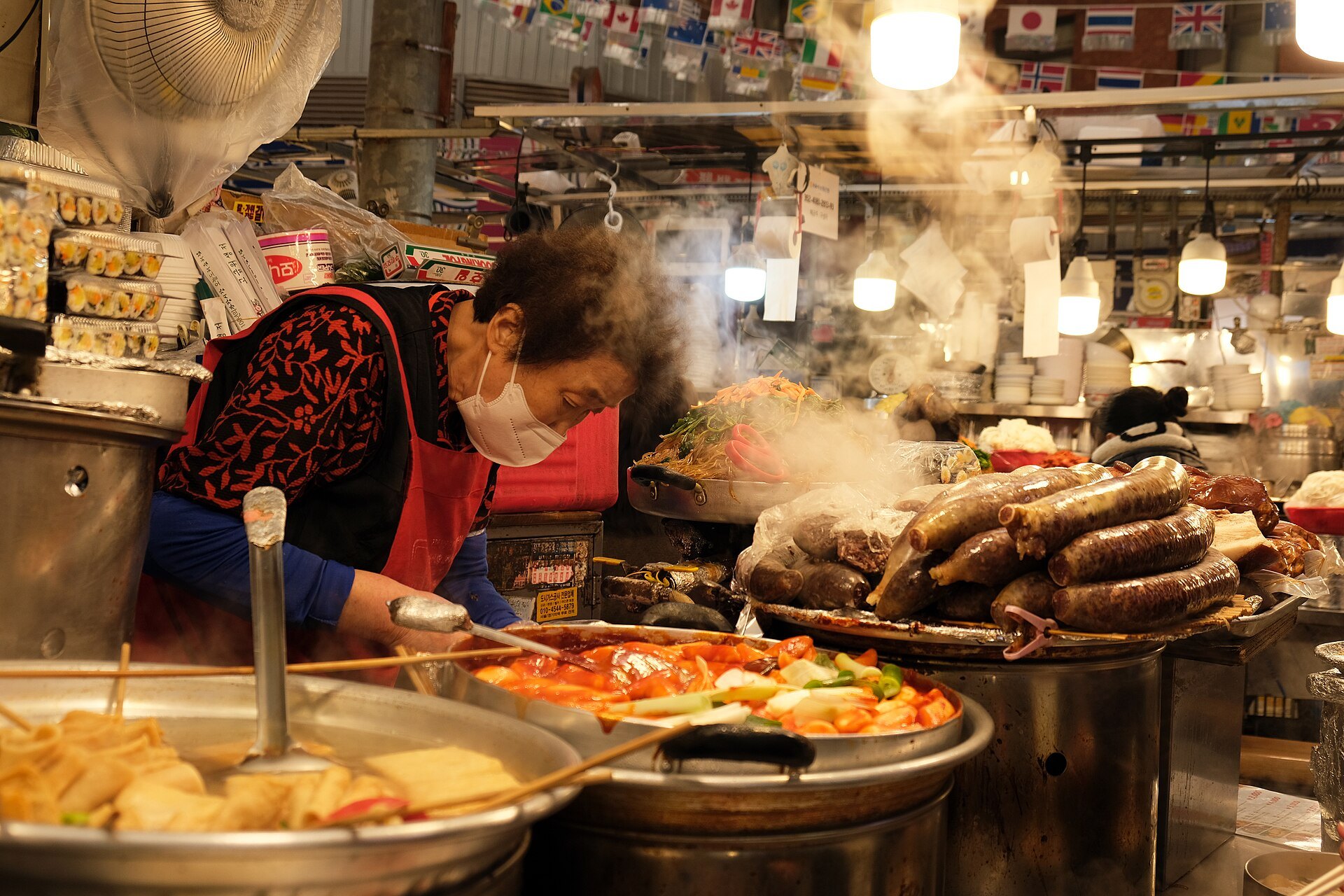
What to order: bindaetteok, a mung-bean pancake ground on the spot and fried in a shallow pool of oil; mayak gimbap, small seaweed rolls with mustard sauce, named “narcotic” because you cannot stop; tteokbokki; raw beef tartare; and live octopus, if that is a thing you want.
What it costs
⭐ Free to walk through. Eating is cheap by any standard, and cash still moves faster than card at the smaller stalls, though almost everywhere now takes card.
⚠️ Some stalls have a reputation for quoting differently to visitors. Prices are usually posted; look before you sit, and sit somewhere with a queue of Korean office workers at it.
When to go
Lunch is the real thing — the market is full of people who work nearby. Evenings are busier and more of a night out. Individual stalls keep their own days off, so the market is never entirely shut and never entirely full.

Getting there
Jongno 5-ga station on line 1, exit 8, is the closest. Euljiro 4-ga on lines 2 and 5 also works. It is one block north of the Cheonggyecheon.

If you only have an hour
Walk the length of the main cross-aisle once without stopping to see what is there, then come back and sit down. Sharing a stool-width of counter with strangers is the format and nobody minds.
Then upstairs for the fabric floor, which almost no visitor sees and is the older half of the market.
What people get wrong
Filling up at the first stall inside the door. The good ones are in the middle.

Nearby
Ticketing arrangements, closing days and boat timetables as published and checked on 5 September 2026. These change without much warning — confirm with the place itself before you travel. More sights, and how they fit together, in Landmarks & Sights.