How the free side dishes work, why there is a grill in the table, what a pojangmacha is, and why nobody in Korea tips.
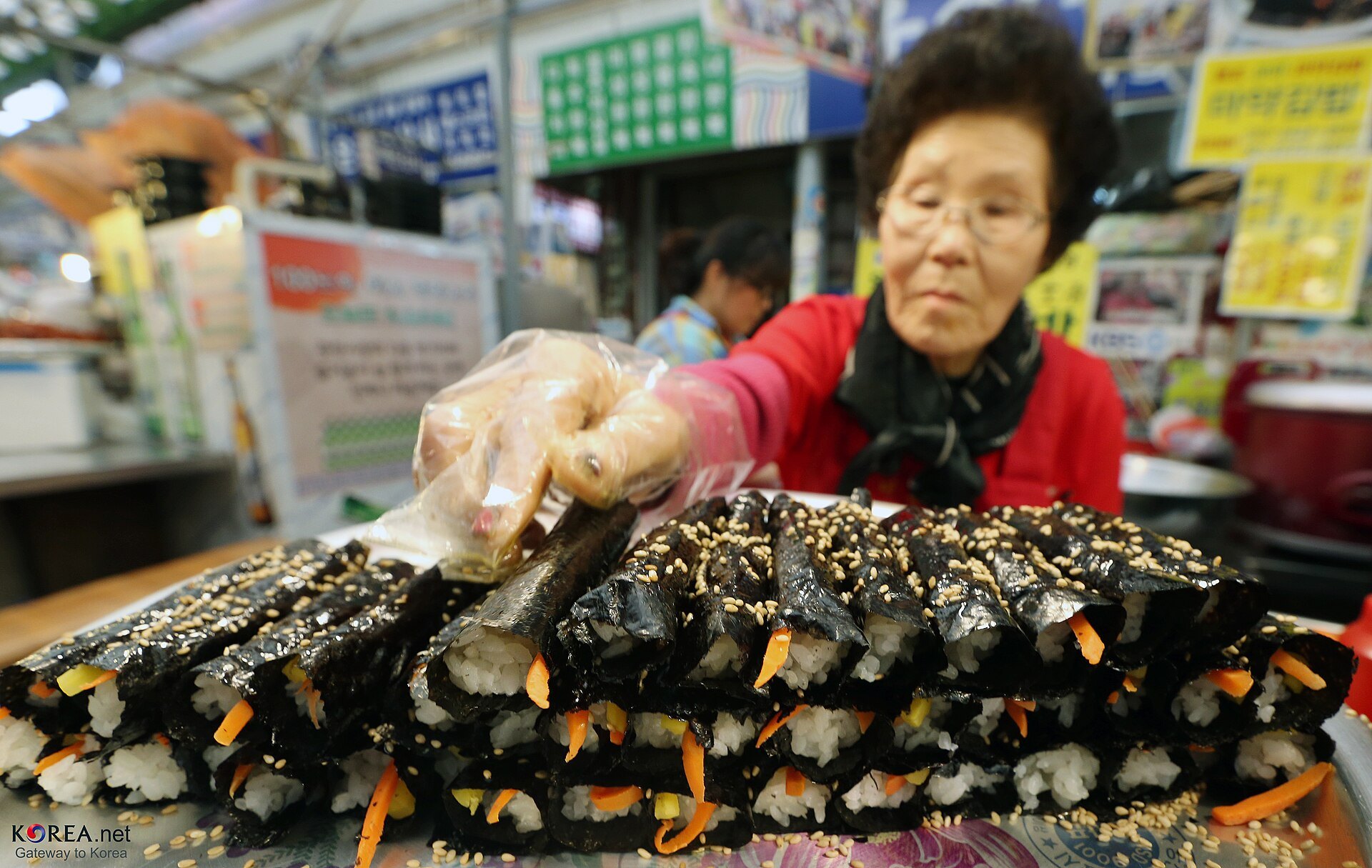
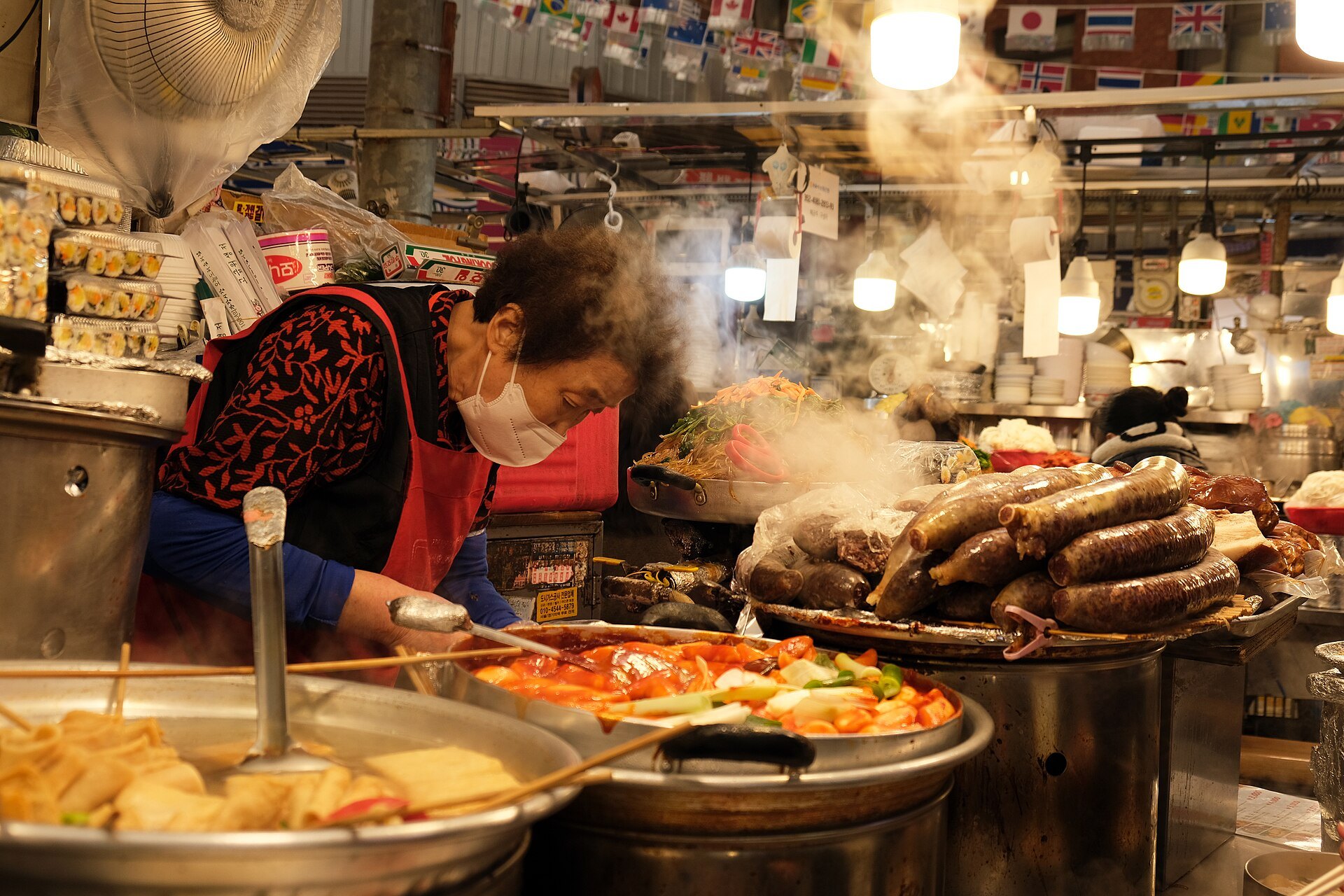
Photograph by Republic of Korea from Seoul, Republic of Korea, Wikimedia Commons, CC BY-SA 2.0
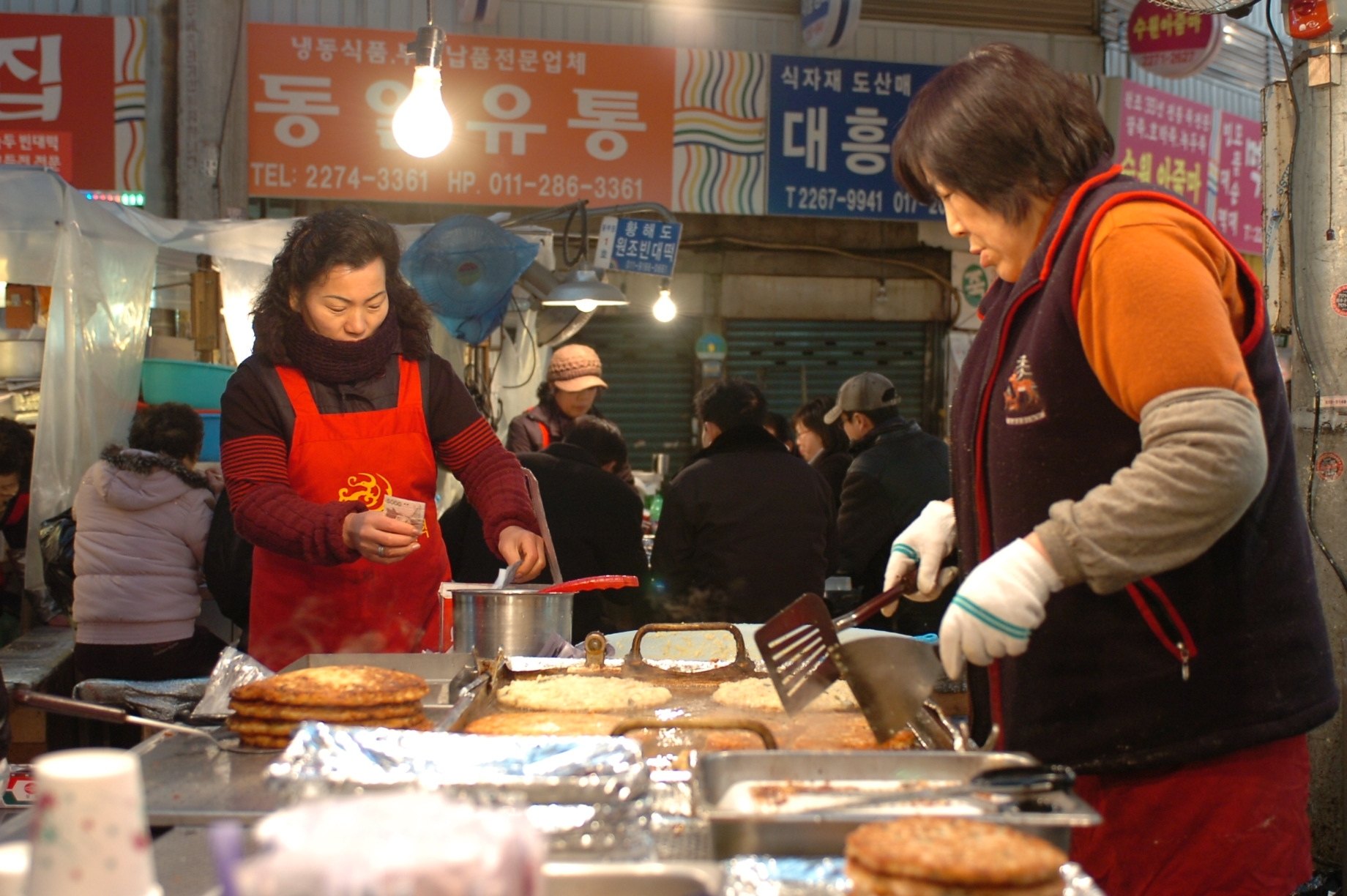
Photograph by Pfc. Bo Park, 2ID PAO, US Army, Wikimedia Commons, Public domain
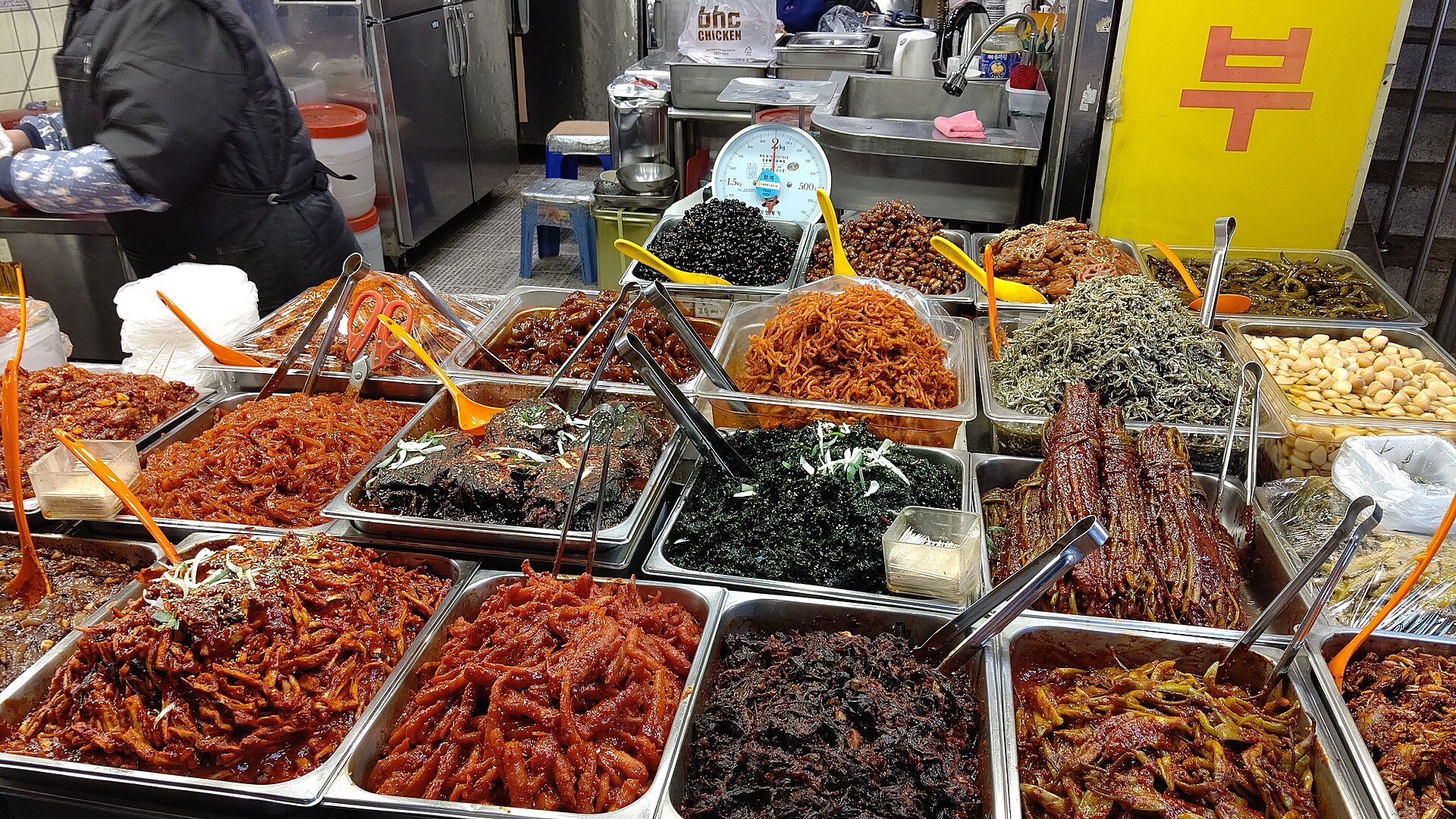
The side dishes are free and they are not a starter
Sit down in a Korean restaurant and small plates arrive before you have ordered anything. These
are banchan. They come with the meal, they are included, and in most places
they are refilled free — you ask, or you help yourself from the counter. Kimchi,
pickled radish, seasoned greens, egg, small fried things. They are not an appetiser to be worked
through before the food arrives; they are eaten alongside it, all the way through.
This one convention is the biggest single difference between eating in Korea and eating
anywhere else, and getting it wrong makes a meal confusing.
Photograph by Stck w This photo was taken with Sharp Aquos R3, Wikimedia Commons, CC BY-SA 4.0
Why there is a grill in the table
Korean barbecue is cooked by the diners, at the table, over gas or charcoal set into it. Staff
will start it, cut the meat with scissors as it cooks, and change the grill plate when it burns —
that is normal and not a hint. Meat is ordered by weight, usually with a two-portion minimum, which
is why solo barbecue is unusual and why the format is built around a group.
You eat it wrapped: a leaf of lettuce or perilla, meat, a smear of ssamjang, garlic if
you want it, folded and eaten in one.
Bibimbap — rice, vegetables, egg, gochujang, mixed vigorously before eating.
Samgyetang — a whole young chicken stuffed with rice and ginseng in broth,
eaten in the hottest weeks of summer, which sounds wrong and is not.
Naengmyeon — cold buckwheat noodles in iced broth, the other summer answer.
Bindaetteok — mung bean pancake, best at Gwangjang.
Jjigae — a bubbling stew, kimchi or soybean paste, shared from the pot.
Chimaek — fried chicken and beer, an institution rather than a meal.
The tent bars
A pojangmacha is an orange-tarpaulin street tent with plastic stools, serving
soju and a short list of things to eat with it. They appear in the evening and are gone by morning.
They are fewer than they were, and they are the most enjoyable cheap night out in the city.
Practical
⭐ Nobody tips. Not in restaurants, not in taxis, not in bars. It is not
expected and can be genuinely awkward. The price on the menu is the price.
Water is free and self-service on almost every table. Call staff over — there is often a button
on the table for it — rather than waiting to be noticed. Eating alone was once socially odd and now
is entirely normal, but barbecue and stew places are still built for groups.
⚠️ Vegetarians should be careful. Fish sauce and anchovy or beef stock are in a
great many dishes that read as vegetable, including most kimchi. Buddhist temple cuisine is the
reliable exception and there is now a real vegan scene, but "no meat" does not mean what it means
elsewhere.
Banchan (반찬) are the small side dishes brought out with a Korean meal. They cost nothing beyond the price of the main dish. They are not a starter. They arrive with the rice and the main protein, not before it, and the same bowls stay on the table through the whole meal. Refills are the … Read more
.jpg)