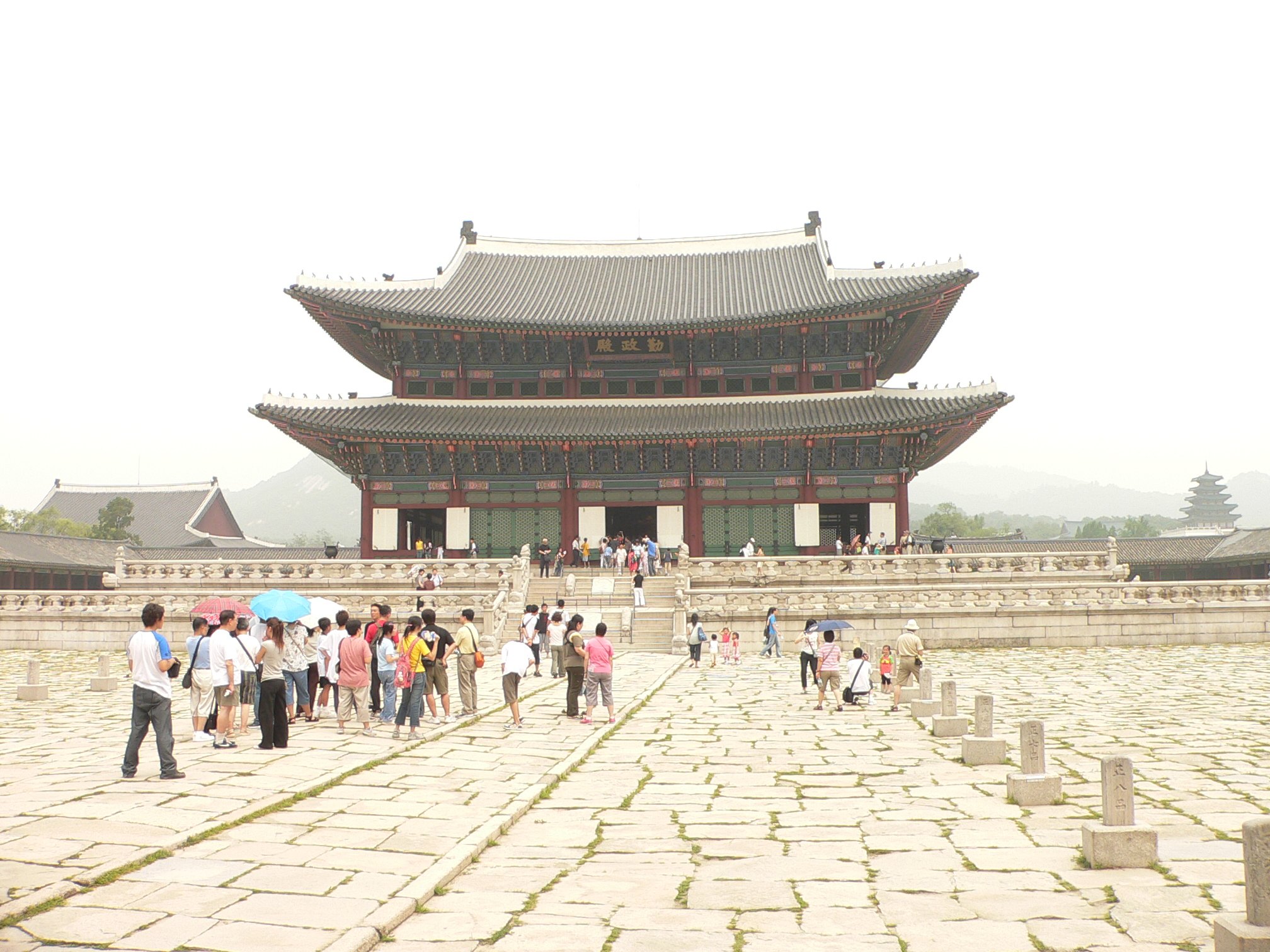

The main royal palace of the Joseon dynasty, laid out in 1395 on the axis that still organises central Seoul: the mountain behind, the throne hall in the middle, the gate at the front, and the government offices marching south from it down what is now Sejong-daero.
Almost none of what stands is original. The Japanese invasion of 1592 burned it, it lay ruined for two and a half centuries, it was rebuilt in the 1860s, and the colonial government then demolished most of that and put its own headquarters across the front of it. What you walk through is a reconstruction that has been running since 1990 and is not finished. That is not a disappointment — it is the point. The building is a statement about continuity being reasserted, and it is still being asserted.
What it costs
A modest admission, in the range of a coffee. The integrated palace ticket is the one to look at if you are seeing more than two: it covers Gyeongbokgung, Changdeokgung including the Huwon garden, Changgyeonggung, Deoksugung and Jongmyo, and it stays valid for three months, so it does not force everything into one day.
⭐ Wearing hanbok gets you in free. This is a standing policy at all five palaces and at Jongmyo, not a promotion — rent an outfit from one of the shops clustered around Gyeongbokgung and Bukchon, wear it, and walk past the ticket window. It is why the courtyards are full of people in Joseon dress who are plainly not Korean, and it is worth doing on the day you plan to see more than one palace.
Free on Culture Day, the last Wednesday of most months, which also runs later opening at several palaces.
When to go
⚠️ The closing day is not the same at every palace. Gyeongbokgung closes on Tuesday. Changdeokgung, Changgyeonggung, Deoksugung and Jongmyo close on Monday. Plan “palaces on Monday” and you lose four of the five.
Gyeongbokgung is the exception: it closes Tuesday, and it is open when the other four are shut on Monday, which makes Monday the day to come here.
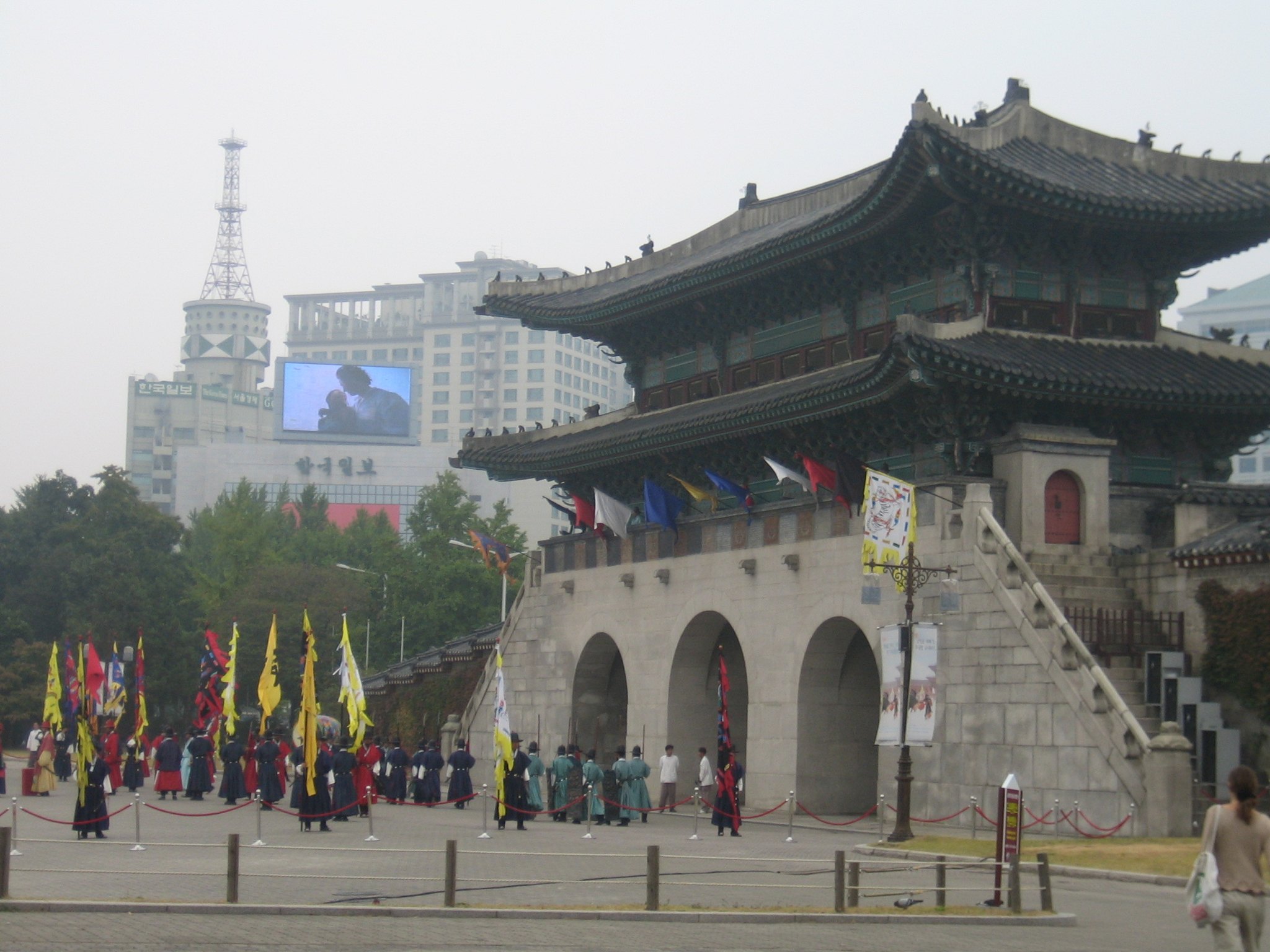
The changing of the guard at Gwanghwamun runs twice a day in the morning and afternoon and is cancelled in bad weather and extreme heat. It is free and it happens outside the ticket line, so you can watch it without going in at all.
First thing is genuinely better here. The courtyard is enormous, there is no shade in it, and by eleven in summer it is punishing.

Getting there
Gyeongbokgung station on line 3, exit 5, comes up inside the palace grounds at the National Palace Museum. Gwanghwamun on line 5 puts you at the south end of the square with the whole approach in front of you, which is the better arrival if you are seeing it for the first time.

If you only have an hour
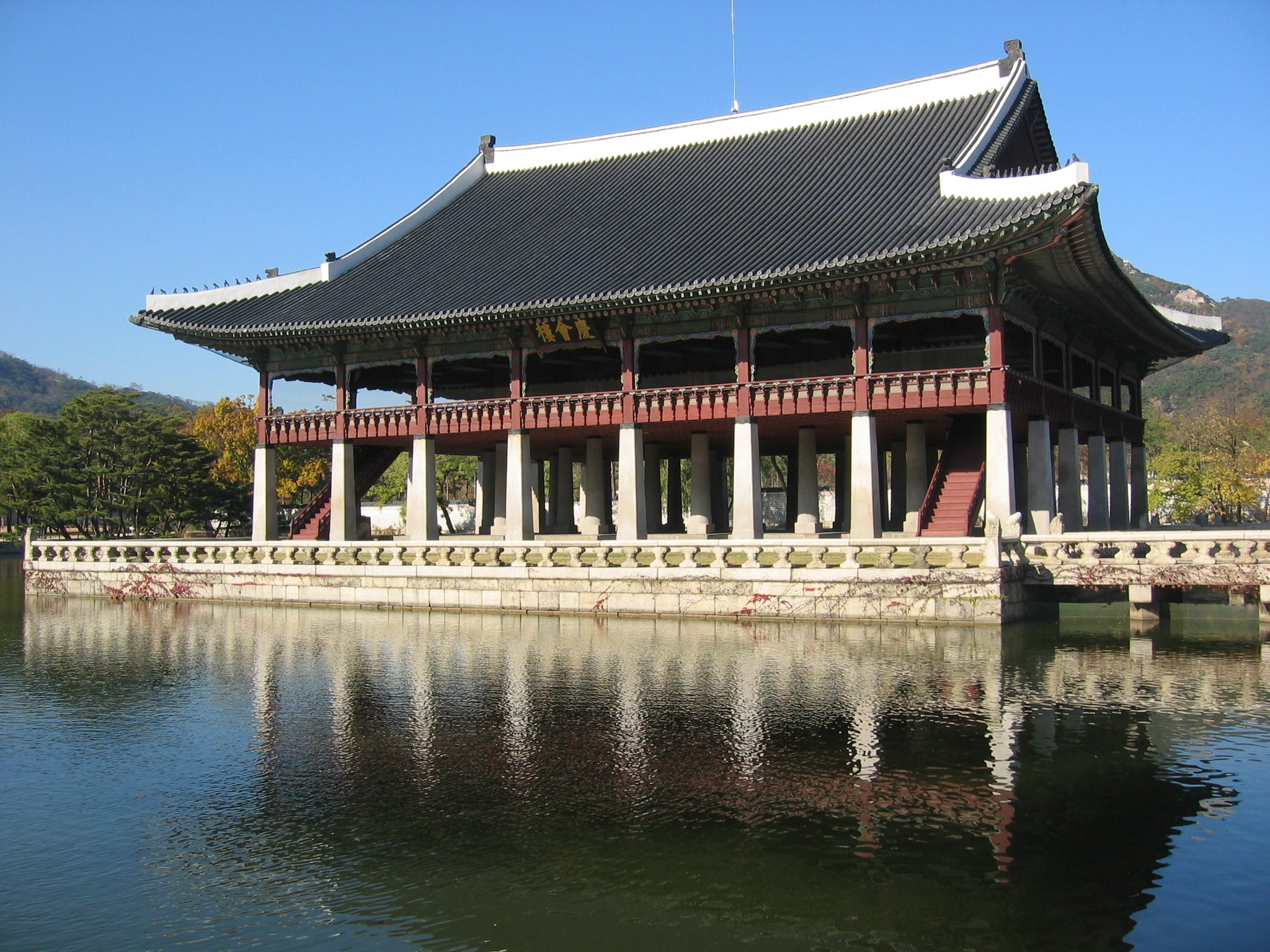
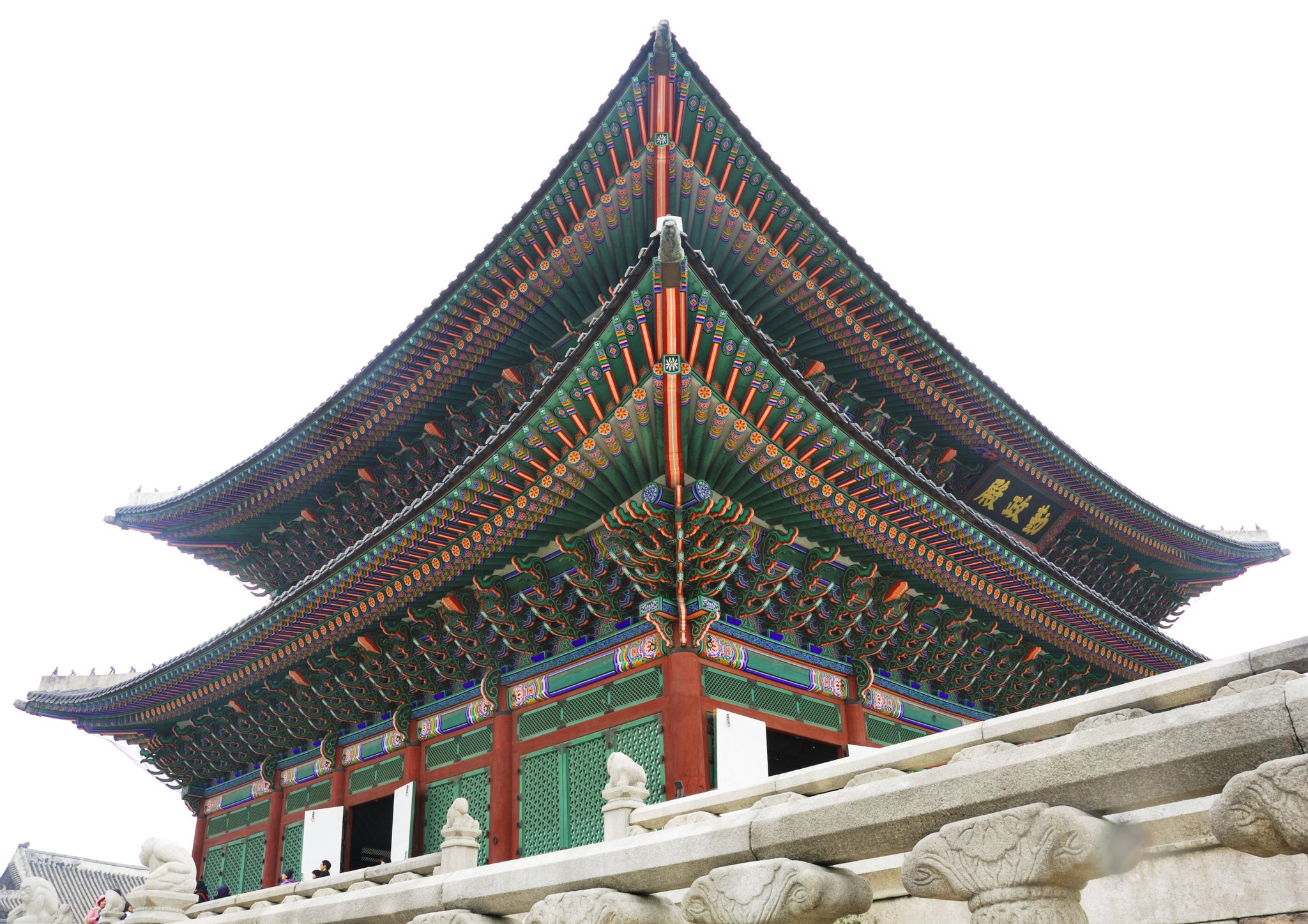
Through Gwanghwamun and Heungnyemun to the throne hall, Geunjeongjeon, standing on its double terrace in the middle of a stone court with the rank markers still set in the ground where the officials stood. Then west to Gyeonghoeru, the banqueting pavilion on forty-eight stone pillars in its own lake, which is the photograph everyone takes and deserves to be.
Keep going north and it empties out. The residential quarters and the hexagonal Hyangwonjeong pavilion on its island are barely ten minutes further and hold a fraction of the crowd.
The National Folk Museum and the National Palace Museum are both inside the grounds and both free.
What people get wrong
Coming on a Tuesday. It is the one palace that closes then, and the mistake is usually made by people who checked the closing day for a different palace.
Doing it in an hour. It is 400,000 square metres and the good parts are at the back.

Nearby
Ticketing arrangements, closing days and boat timetables as published and checked on 5 September 2026. These change without much warning — confirm with the place itself before you travel. More sights, and how they fit together, in Landmarks & Sights.