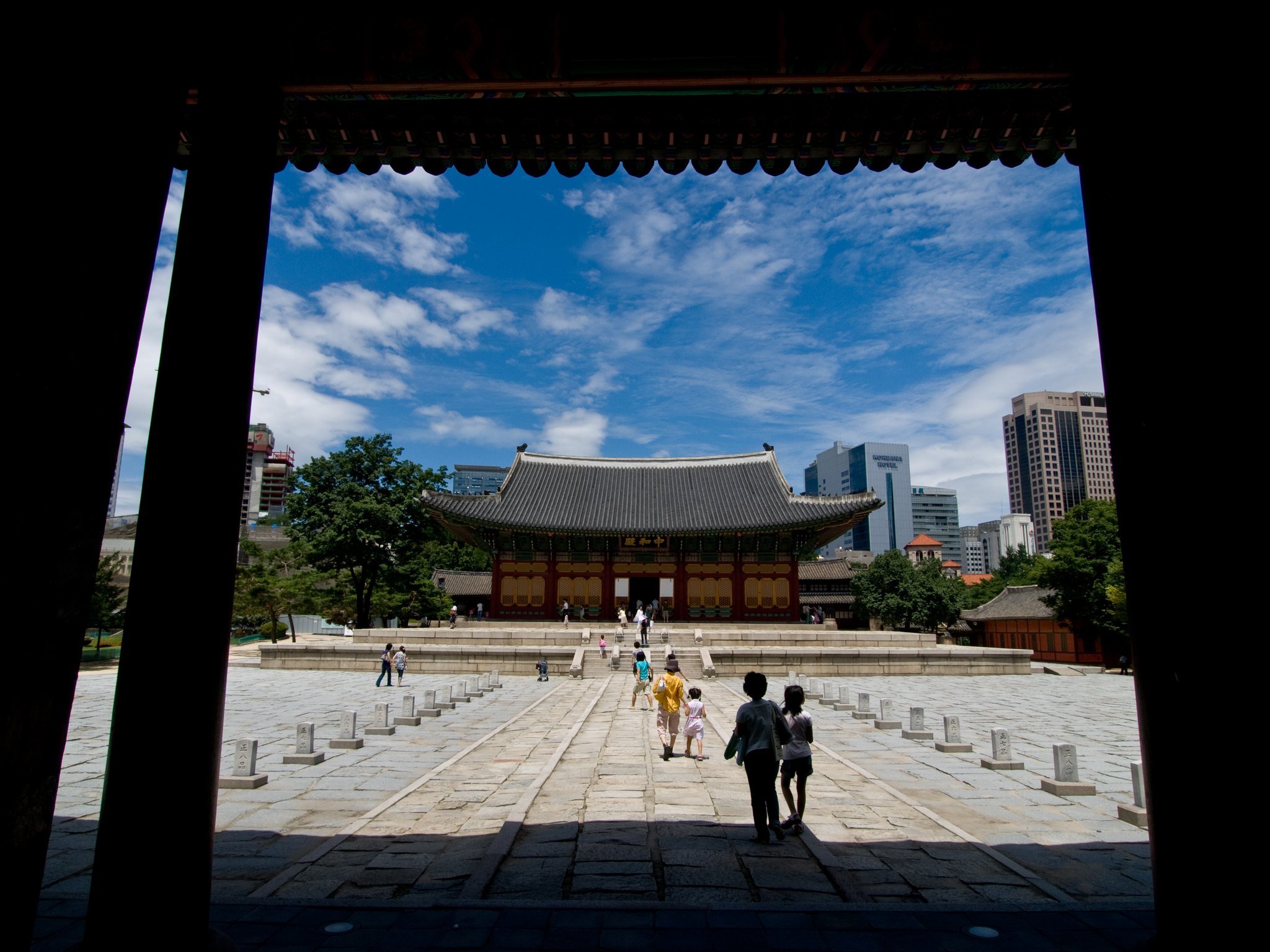

The smallest of the five, in the middle of the business district, and the only one where Korean palace architecture stands next to western neoclassical stone — because this is where the last years of the dynasty were spent, when the Korean Empire was trying to modernise fast enough to survive and did not.
Seokjojeon, the columned stone hall of 1910, is in the same grounds as wooden halls three hundred years older. Behind both are the glass towers of Jung-gu. Nowhere else in the city are the three centuries stacked that visibly.
What it costs
A small admission, included in the integrated ticket. Seokjojeon’s interior is a separate free guided tour that must be reserved in advance and is worth the trouble — the rooms are furnished as the imperial household left them.
⭐ Wearing hanbok gets you in free. This is a standing policy at all five palaces and at Jongmyo, not a promotion — rent an outfit from one of the shops clustered around Gyeongbokgung and Bukchon, wear it, and walk past the ticket window. It is why the courtyards are full of people in Joseon dress who are plainly not Korean, and it is worth doing on the day you plan to see more than one palace.
When to go
⚠️ The closing day is not the same at every palace. Gyeongbokgung closes on Tuesday. Changdeokgung, Changgyeonggung, Deoksugung and Jongmyo close on Monday. Plan “palaces on Monday” and you lose four of the five.
Closed Monday, and open later into the evening than the other palaces on most days, which makes it the one to do after work or after everything else has shut.
The changing of the royal guard at the Daehanmun gate runs several times a day, is free, and happens on the pavement — you can watch the whole thing without a ticket.
.jpg)
Getting there
City Hall station, lines 1 and 2, exit 2, and the gate is right there. This is the most central sight in Seoul and the easiest to fit into a gap.

If you only have an hour
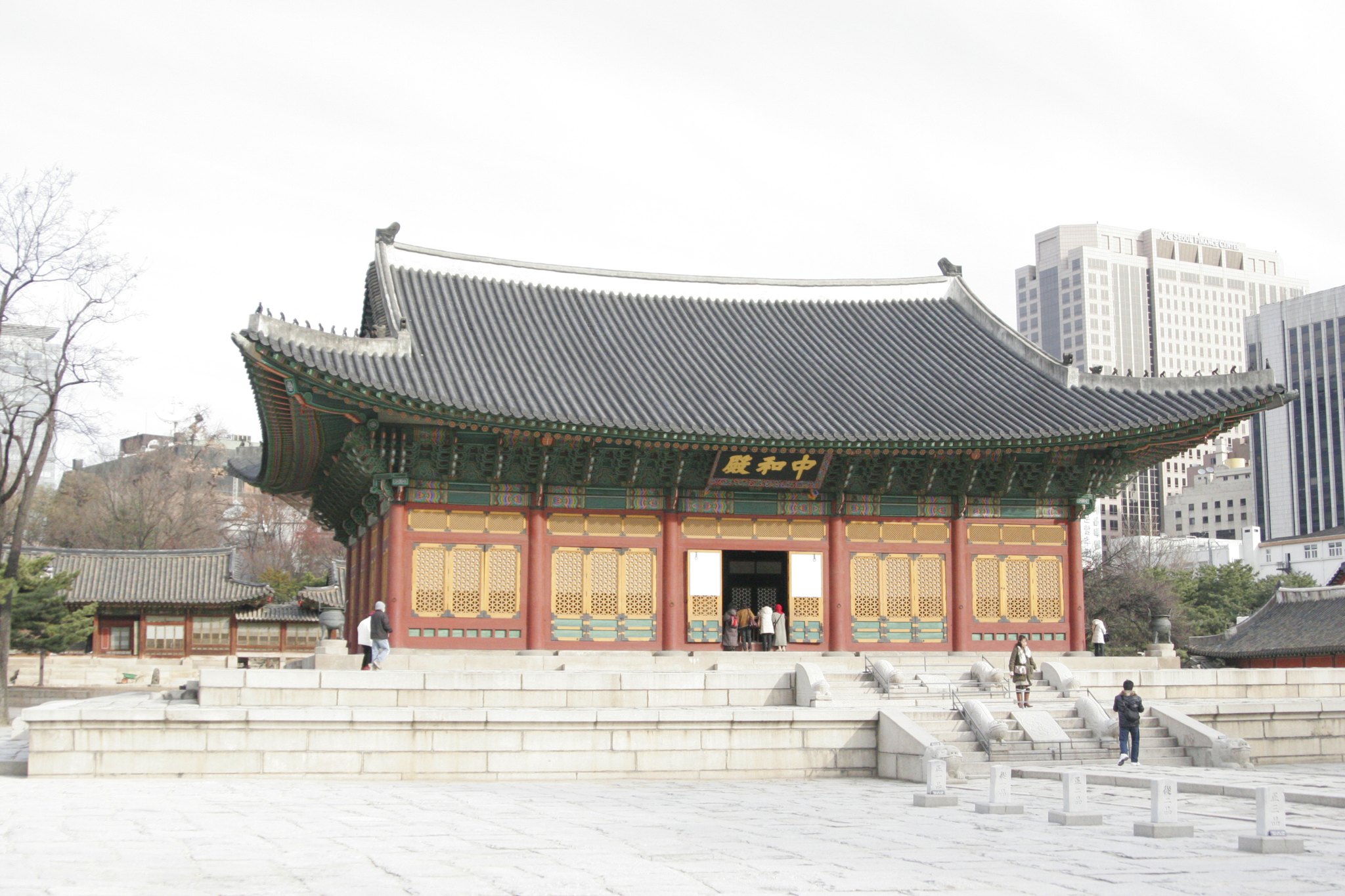
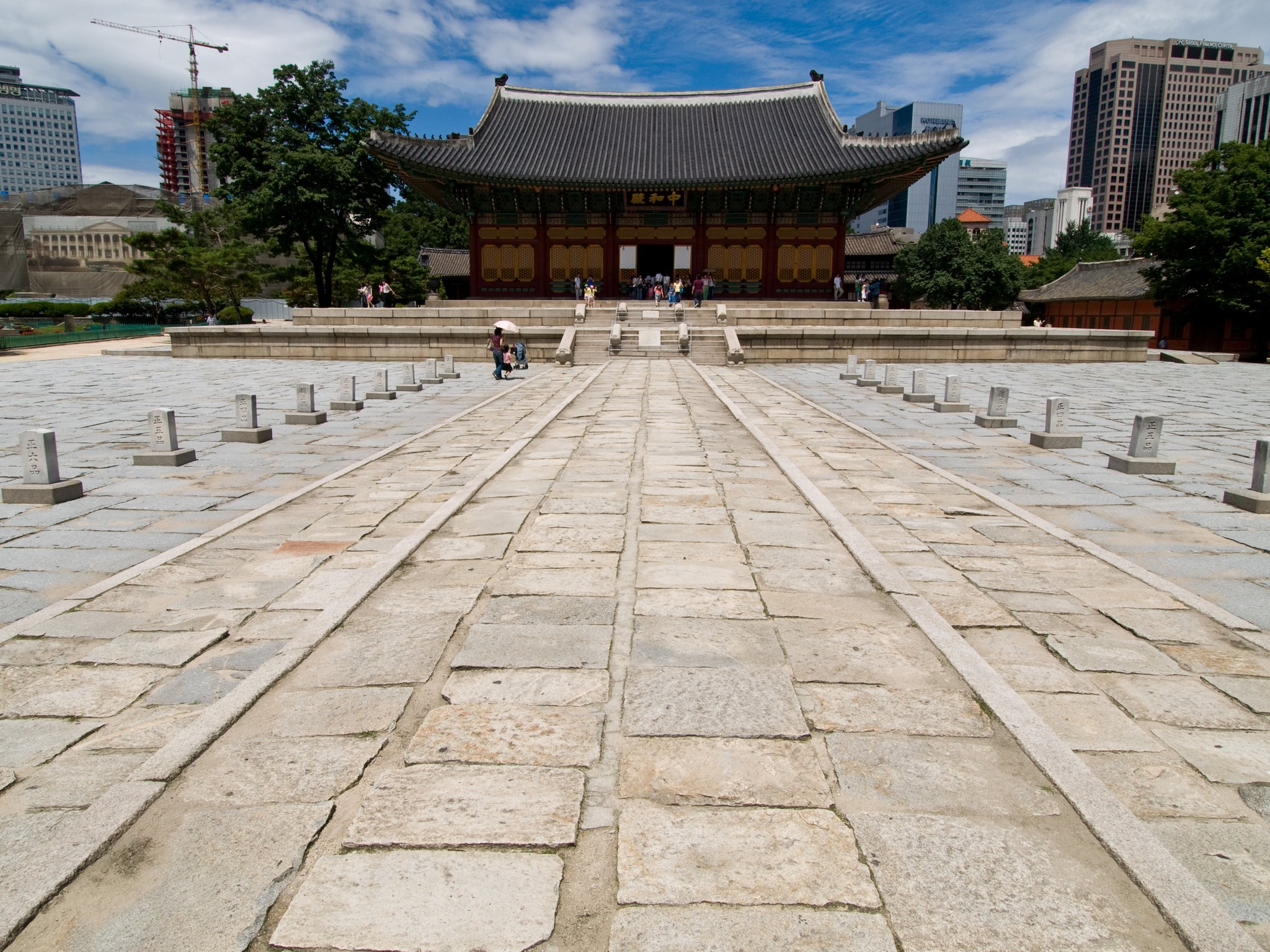
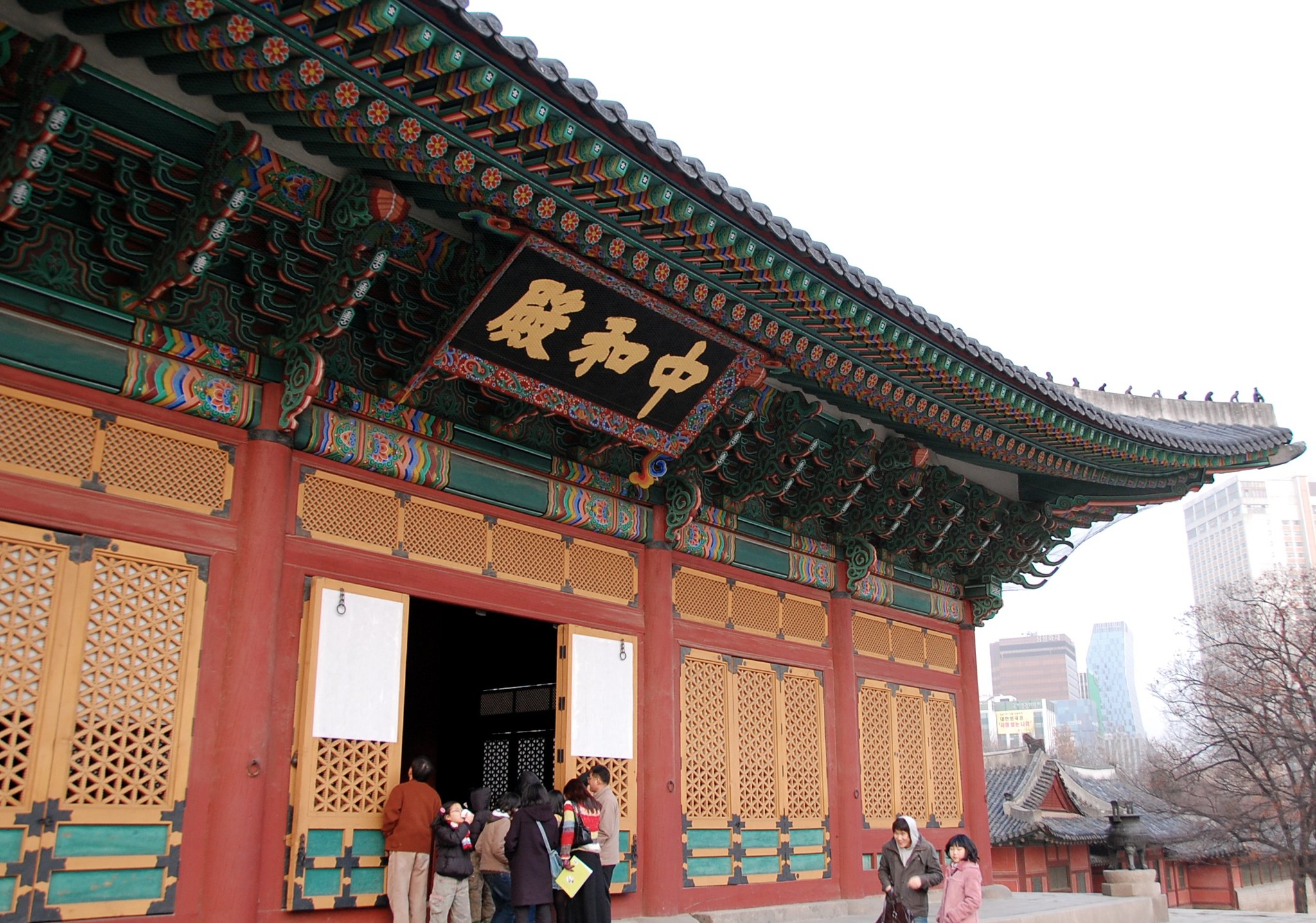
Junghwajeon, the throne hall, then straight across to Seokjojeon and the National Museum of Modern and Contemporary Art wing beside it.
Then leave by the back and walk Deoksugung-gil, the stone-wall road, which runs along the outside of the palace under old trees and is one of the few genuinely pleasant walks in central Seoul.
What people get wrong
Assuming the stone building is a later intrusion on a Joseon site. It was built by the Korean court, for the Korean court, and it is as much a part of the palace’s history as the wooden halls.

Nearby
Ticketing arrangements, closing days and boat timetables as published and checked on 5 September 2026. These change without much warning — confirm with the place itself before you travel. More sights, and how they fit together, in Landmarks & Sights.