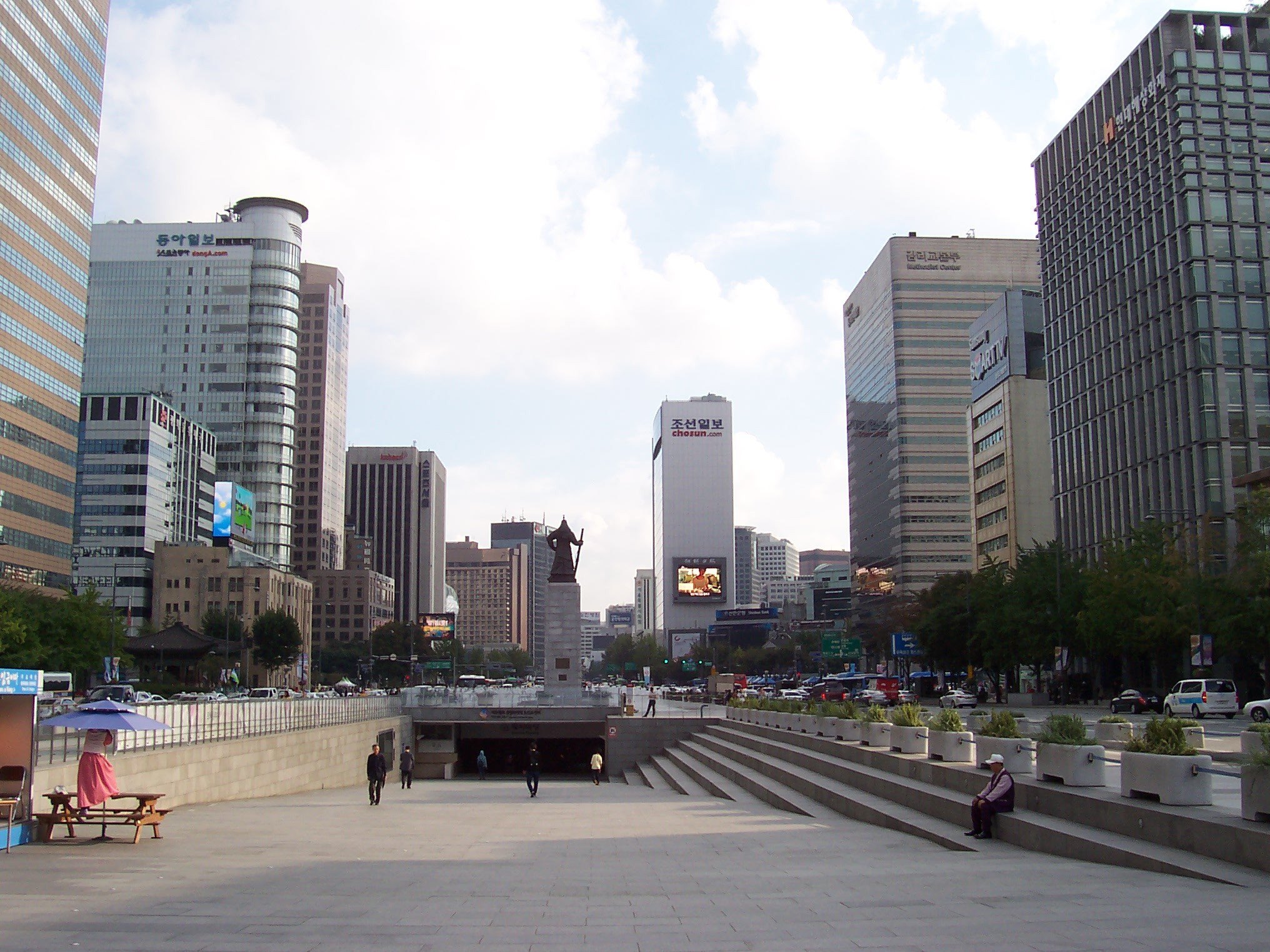

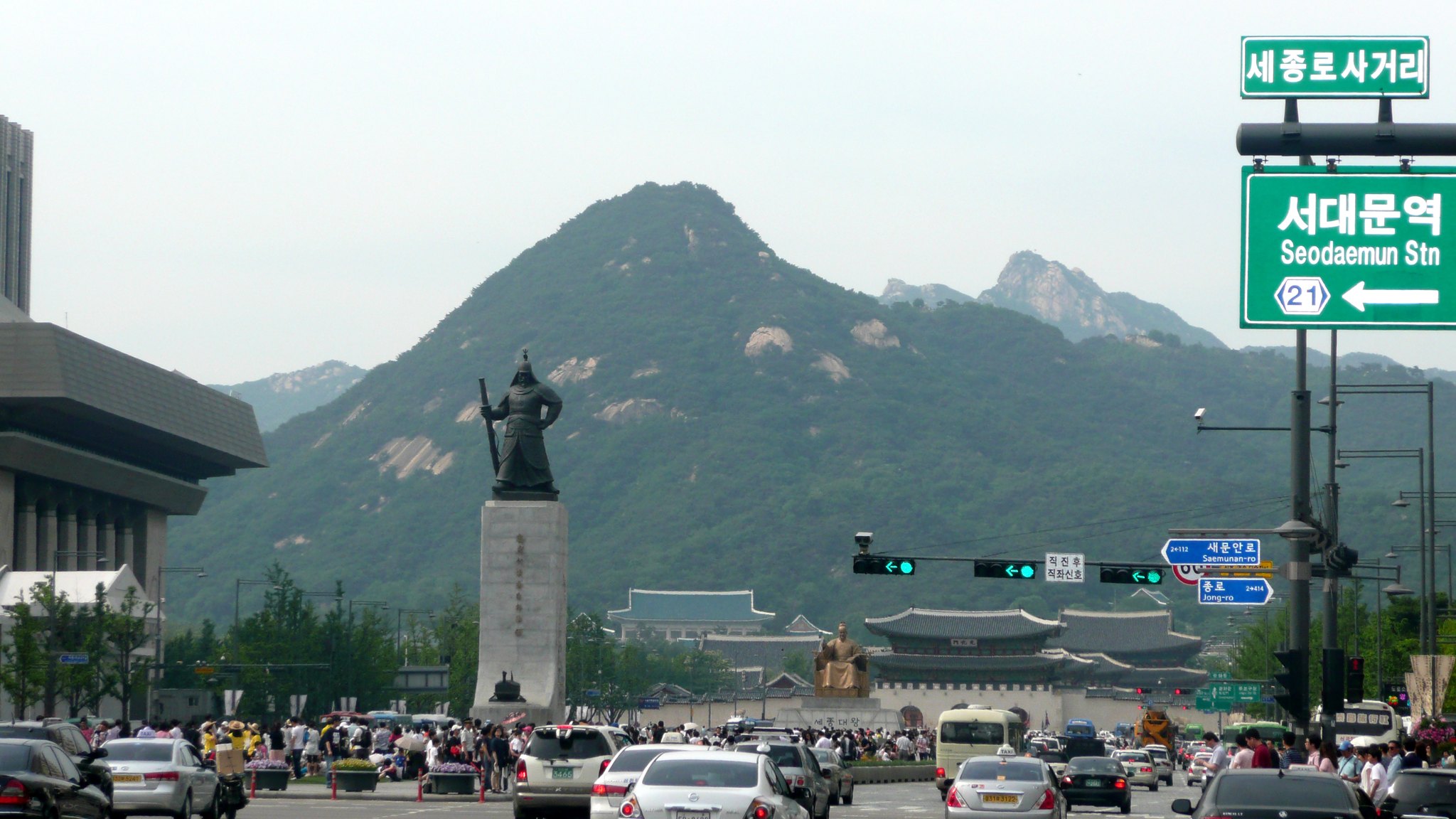
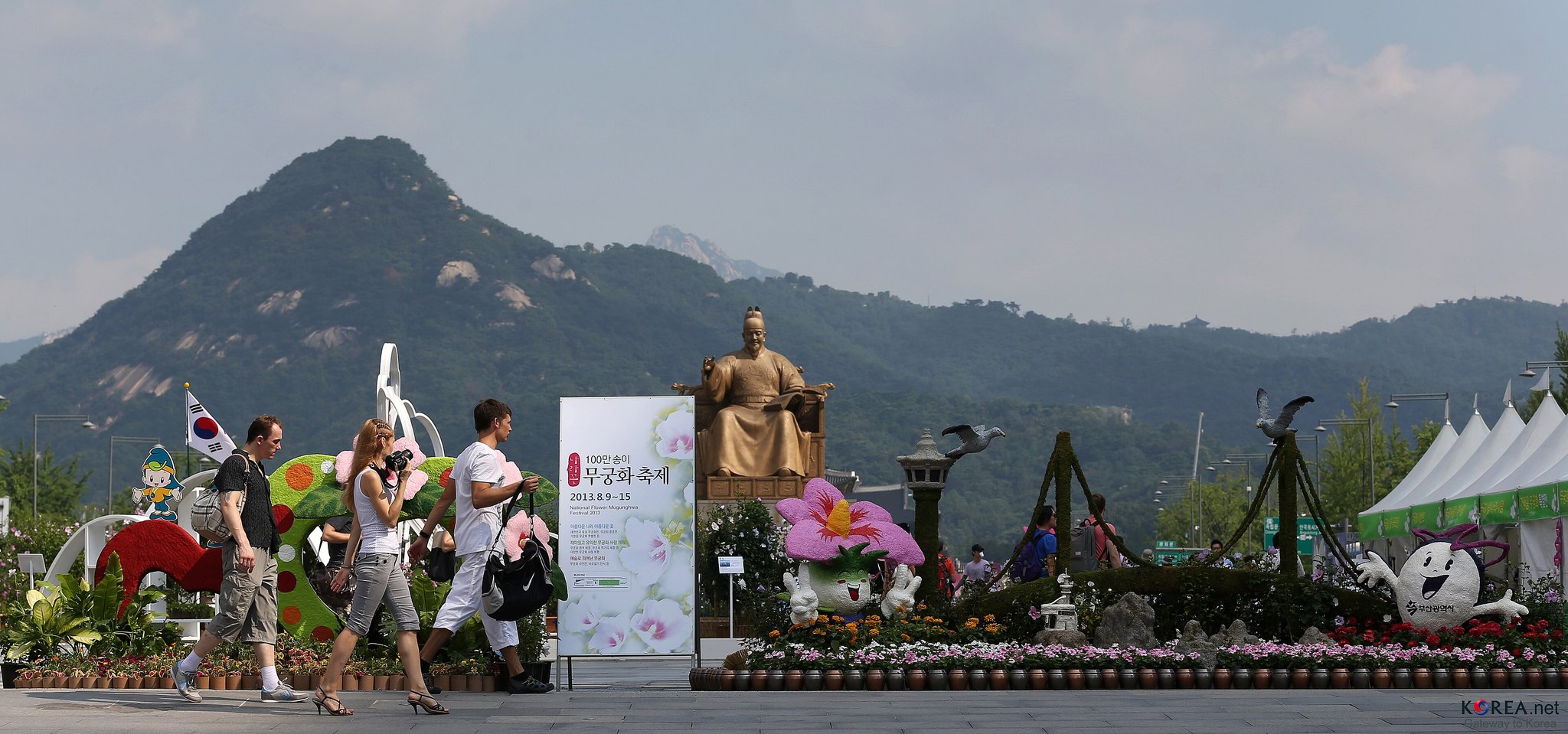
The wide pedestrian space running south from the gate of Gyeongbokgung, on the axis the city was founded on. Two bronzes stand on it: Admiral Yi Sun-sin, who beat a Japanese fleet with a dozen ships, and King Sejong, who commissioned the Korean alphabet.
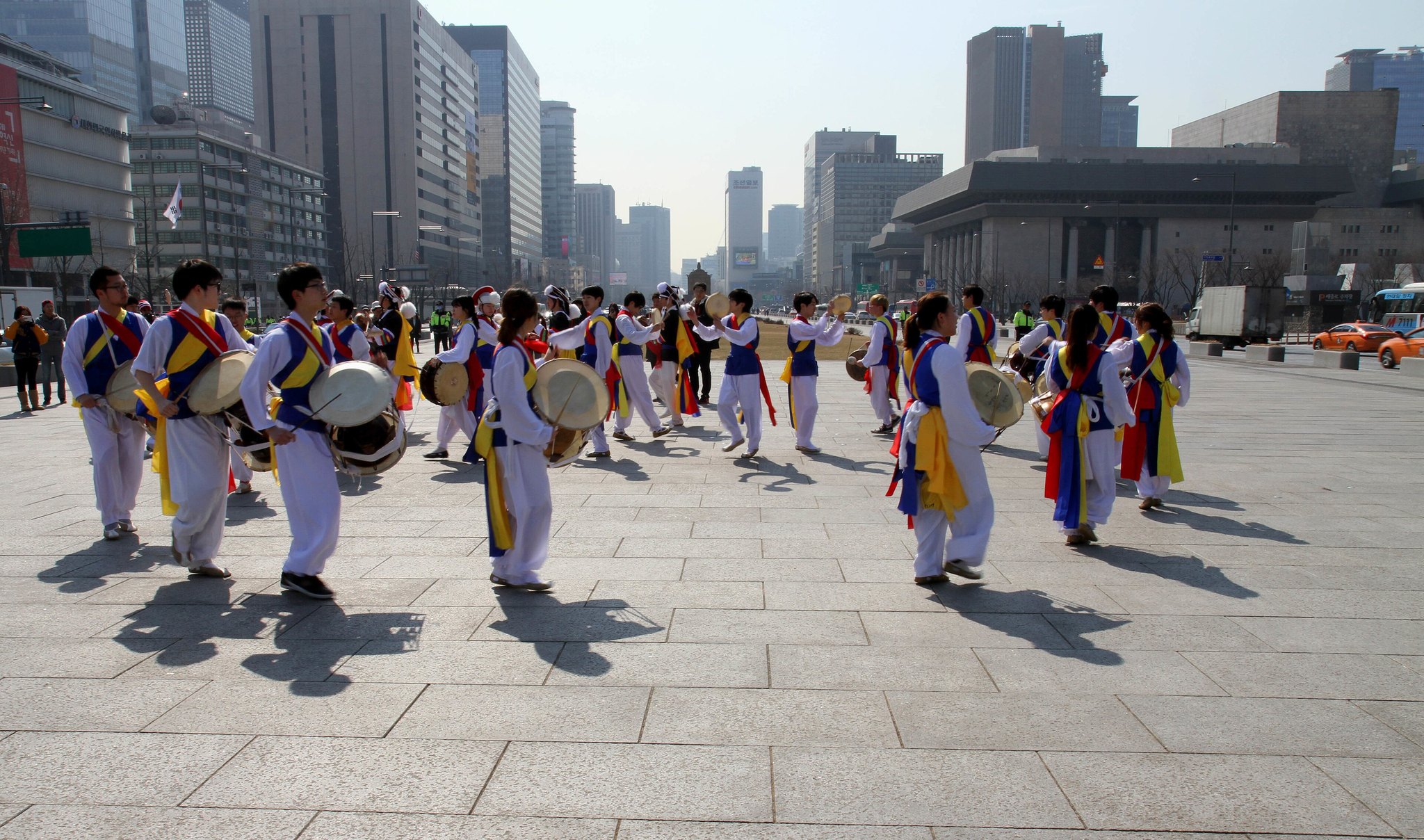
It is also where Korea does its politics. The candlelight demonstrations that removed a president in 2016 and 2017 filled this square, and it is used for protest, celebration and national mourning continuously. If something is happening in the country it is happening here.
What it costs
⭐ Free, open, and never shut. So are the two underground exhibition halls beneath it, under the statues — one on Sejong and the alphabet, one on Yi Sun-sin and the turtle ships — which almost nobody realises are there.
When to go
Any time at all. It is lit at night and the fountains run in summer.
⚠️ Large demonstrations close it and the surrounding roads regularly, usually at weekends. They are peaceful and heavily policed, but if you want the empty photograph, come on a weekday morning.

Getting there
Gwanghwamun station on line 5, exit 2, comes up onto the square itself. Gyeongbokgung on line 3 puts you at the top end.
.jpg)
If you only have an hour
Walk it north, from Sejong towards the gate, with Bugaksan closing the view behind the palace roof — that alignment is the whole reason the city is where it is. Then down the steps into the exhibition halls, which are free, air-conditioned and empty.
The Cheonggyecheon starts two minutes east, and Deoksugung is ten minutes south.
What people get wrong
Walking past the statues and not going under them.

Nearby
Ticketing arrangements, closing days and boat timetables as published and checked on 5 September 2026. These change without much warning — confirm with the place itself before you travel. More sights, and how they fit together, in Landmarks & Sights.