Seollal (Lunar New Year) and Chuseok (the autumn harvest festival) are the two points in the year when Korea genuinely stops. Each is a three-day statutory public holiday, surrounded by extra days that many workers add as annual leave to build a longer break. The real disruption to a visitor’s plans runs longer than the three official days — and knowing which days are which is the whole trick.
Both holidays follow the lunar calendar, so their dates shift every year and sometimes fall in a different Gregorian month entirely. There is no fixed figure to give here, and a date printed in an older article should be treated as wrong by default. Check the dates for the year of travel against the Korea Tourism Organization’s own calendar before booking anything — flights, internal trains, or hotel nights either side of the holiday.
What “Three Days” Actually Means
Under the Korean government’s public holiday structure, Seollal and Chuseok are each observed as the day before, the day itself, and the day after — three consecutive statutory days off. If one of those three falls on a weekend, a substitute holiday (daechehyuil) is usually added on the next working day, which pushes the closure window out further. This is a structural rule, not a fixed date, and it is worth confirming for the specific year, since the substitute-day policy has itself been adjusted over time.
On these three statutory days, expect closures at government offices, banks, most small and family-run restaurants, and traditional markets — Gwangjang Market among them, since it is built from individually run stalls rather than a single managed operator. Many museums close too, including on days that are not their usual weekly closing day. The National Museum of Korea publishes its own holiday closure notice each year rather than following its standard schedule automatically, so the museum’s own site is the thing to check, not a general rule of thumb.
The Decision Rule: Core Days Versus Bridge Days
The three statutory days are not the whole story. Around them sit “bridge” days — ordinary weekdays that fall between a statutory day and a weekend, which a large share of office workers take as annual leave to turn three days off into five, six or more. Those bridge days look like a normal working day on the calendar, but in practice a significant fraction of the city is already away. This is the distinction worth building a trip around:
| Day type | What is typically closed | What usually still runs, but differently | What it means for a visitor |
|---|---|---|---|
| Core statutory day (the 3-day holiday itself) | Government offices, banks, most family-run restaurants, traditional markets, many museums, some palace ticket counters | Large retail chains, convenience stores, some tourist-facing restaurants near major attractions | Seoul itself is often unusually quiet, since residents have left for their hometowns — but food and market options are the most restricted they will be all year |
| Bridge day (a weekday leave-day adjacent to the holiday) | A smaller share of businesses, mostly at the owner’s discretion | Restaurants, palaces and markets generally open, but shorthanded and slower; some stalls open later or close earlier than posted | The better day to arrive, depart, or do anything that depends on a business being open — but intercity trains and roads are at their most congested on bridge days, since this is when the mass movement in and out of Seoul actually happens |
The practical rule follows directly from that table: if the itinerary is flexible, land a flight or book a hotel so that the bulk of the stay falls on bridge days rather than the three core days, and treat the core days themselves as a period for things that don’t depend on a shop being staffed — a walk along a palace that happens to be open, or Hanyangdoseong, the city wall, which has no gate and no opening hours to close.

Palaces: A Holiday Exception Worth Checking
The usual rule that each palace closes on a fixed weekday — Gyeongbokgung on Tuesday, the others on Monday — is sometimes set aside specifically for Seollal and Chuseok. In past years several palaces have opened on the statutory holiday with free admission, including on their normal weekly closing day, as part of a long-running push to bring visitors in for the holiday in hanbok. This is a holiday notice issued separately each year by each palace’s own management office, not a permanent change to the closing-day pattern, so it has to be checked for the specific year rather than assumed. If the integrated palace ticket is part of the plan, the same caution applies — ticket counters can be closed even on a day the grounds are open for free.
Changdeokgung’s Huwon, the Secret Garden, runs as a separate timed and guided booking even outside the holiday period; during Seollal and Chuseok it is one of the first things to be suspended or reduced, so anyone with a Huwon booking already made should confirm it is still running rather than discover it on arrival.
Getting In and Out While the Country Is Moving
Both holidays trigger what is effectively the country’s two biggest internal migrations of the year, as people travel to their hometowns. KTX and other intercity rail tickets for the days immediately before and after each holiday sell out fast once booking opens, a pattern Korail documents on its own site, and the operator is the only reliable source for current booking-window dates and seat availability — not a third-party estimate. The same pressure hits expressways and domestic flights. None of this affects the Incheon or Gimpo international routes in the same way, but anyone connecting onward by AREX or a domestic flight around the holiday dates should book earlier than usual, since competition is coming from the whole country, not just other travelers.
Within Seoul itself, the subway and bus network generally keep running on a close-to-normal timetable even on the statutory days, since they serve a city that empties rather than one that needs no service. The normal mechanics still apply: fares are distance-based, so a card has to be tapped out as well as in, on the bus as much as the subway — see how T-money works for the full mechanism — and the usual caution about the last train varying by line and direction still holds, detailed at working out the last train cutoff.
What This Means for Planning
- Find the actual dates for the year of travel before booking anything; they move every year and are published well in advance by the Korea Tourism Organization and the Korean government’s own calendar.
- Identify which days are the three statutory core days and which are bridge days, and weight a flexible arrival or departure toward the bridge days.
- Expect the core days to be quiet in Seoul’s streets but the most restricted the city gets for food, markets and small museums.
- Check palace holiday notices separately from the normal weekly closing-day rule — the two can diverge specifically around Seollal and Chuseok.
- Book intercity trains and any Huwon slot earlier than normal; both sell out faster around these dates than at any other point in the year.
None of this is a reason to avoid Seoul around either holiday — a visitor who lands on a bridge day and treats the core days as a wall-and-palace stretch rather than a restaurant-hopping one tends to have an easier trip than one who assumed the city would run as usual. More on how the wider transport network copes with seasonal spikes is in Getting Around, and the broader seasonal planning questions — what else shifts across the Korean calendar year — are gathered in Planning & Practicalities. How this site sources and checks claims like the ones above is explained on the About page.
Access Seoul is an independent guide written from published, checkable sources. We have not visited the places described here and we do not publish personal recommendations or invented ‘local favorites’ — where something is singled out as notable, we say who says so. Opening times, fares, closures and prices change at short notice, so treat everything here as a starting point and confirm with the museum, operator or venue directly before building a day around it. We give no advice on visas, insurance, health or safety; use your own government’s official guidance for those.
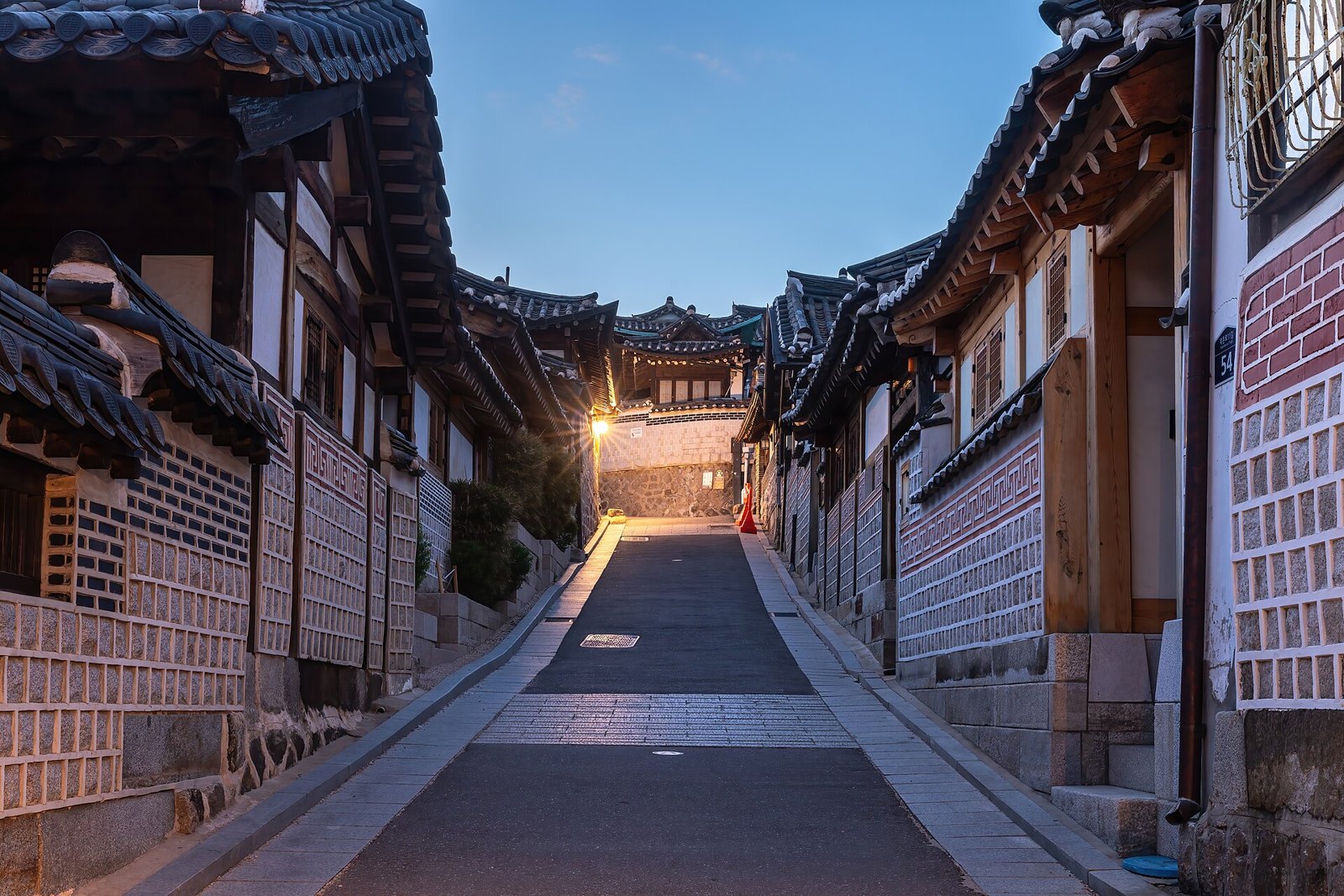
Featured image: Photo by Basile Morin, source, CC BY-SA 4.0
